

.png)
SeqOne is proud to join the world’s largest gathering of human genetics and genomics specialists at the ASHG 2026 Annual Meeting.
Bringing together global researchers, clinicians, and industry leaders to present groundbreaking science, ASHG highlights cutting-edge discoveries across functional genomics, disease gene identification, translational diagnostics, and population-scale genomics.
Key Themes:
- Translational Genomics & Clinical Care: Accelerating the integration of novel genetic findings into diagnostic workflows, risk prediction, and targeted therapies.
- Omics Innovations & Data Science: Advancing high-throughput sequencing technologies, single-cell analysis, multi-omics, and AI-driven bioinformatic pipelines.
- Population Genetics & Diversity: Expanding genomic research across diverse ancestry cohorts to uncover fundamental biology and ensure equitable precision medicine.
🧬 Experience the platform at Booth 521
- One NGS Platform, Built for Scale: End-to-end interpretation workflow with broad wet lab and sequencer compatibility.
- AI Precision for Clinical Workflows: Built for real-world labs, SeqOne delivers fast, actionable insights, helping your team spend less time on variant interpretation and more time on confident clinical decisions.
- Evaluate SeqOne for yourself: Visit our booth to explore our latest resources and learn how to start a free 30-day trial using your own data.
📣 Join our ASHG CoLab Theater:
Newborn Genomics, at Scale: Screening at Scale, Genome-Informed Care in the NICU
Inflection Medicine and Brigham and Women’s Hospital delve into the importance of advanced bioinformatics to advance newborn care.
Genomic sequencing at birth can deliver diagnoses months or years earlier than the current standard of care, but it has to work in two very different settings: population-scale screening, where cost per sample decides whether a program is viable, and the NICU, where a critically ill infant's family needs an answer in days.
This session brings together two teams tackling each, and the choices they made along the way.
Speakers: Sabrina Suckiel, MS, CGC (Clinical Science Lead, Inflection Medicine) & Andy Bhattacharjee, PhD (Assistant Professor of Pediatrics, Harvard Medical School, Department of Pediatrics Division of Newborn Medicine, Brigham and Women’s Hospital)
Day: Wednesday, October 21st
Time: 4:00 - 4:30 PM
Location: Theater 1
🗓️ Add to Outlook/iCalendar | 🗓️Add CoLab Theater to Google Calendar
📣 Visit our ASHG Poster Presentations:
Board 8100W: Real-World Clinical Validation of DiagAI for WGS Interpretation in the NHS-GMS: Robust Prioritization and Rescue of Pseudogene-Masked Variants
Tired of wading through hundreds of candidate variants or losing diagnostic answers to rigid hard-filters? See how DiagAI combines AI pathogenicity prediction with automated phenotype matching to streamline routine rare-disease interpretation without compromising on hard-to-detect genomic regions.
Across 270 real-world NHS-GMS rare-disease cases, DiagAI exceeded Exomiser v13.2+ with a 93.3% Top-5 diagnostic yield (+7.3% percentage points) while cutting review workloads to just 5 variants per case. Crucially, it rescues diagnostic variants in complex pseudogene regions like GBA1 that traditional hard-filters miss.
Presenter: Alexandre Boulat, Data Science Engineer, SeqOne
Day: Wednesday, October 21st
Time: 2:30 - 4:30 PM
🗓️ Add to Outlook/iCalendar | 🗓️ Add to Google Calendar
Board 8061F: Detection and Classification of Uniparental Disomy from Clinical Whole-Exome Data Using the GermVar Pipeline
Struggling to reliably detect uniparental disomy or distinguish true loss of heterozygosity from genomic deletions in exome data? Explore how GermVar addresses these clinical WES challenges and helps unmask recessive variants or imprinting disorders in routine workflows.
GermVar supports reliable uniparental disomy (UPD) detection from clinical whole-exome data, successfully identifying whole-chromosome, segmental, and rare mosaic UPD events. By combining run-of-homozygosity calling with B-allele frequency screening and CNV integration, it helps reviewers avoid misclassification and provides clear, interactive interpretation reports for both singleton and trio cases.
Presenter: Pablo Botas, VP Product, Rare & Inherited Diseases, SeqOne
Day: Friday, October 23rd
Time: 2:30 - 4:30 PM
🗓️ Add to Outlook/iCalendar | 🗓️ Add to Google Calendar
👋 Meet the SeqOne Team
In town for the event? Let's connect! We’re booking 1-on-1 sessions to discuss whatever is top of mind for your team, from scientific collaborations and business inquiries to live walkthroughs of our NGS platform.
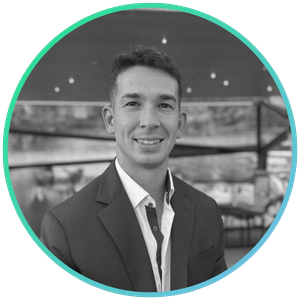
Aaron Hersum
Account Executive, North America
👉Book a Meeting
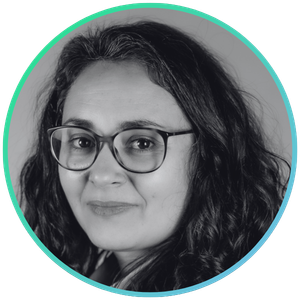
Elodie Hebbati Desmaris
Account Executive, France & Belgium
👉Book a Meeting
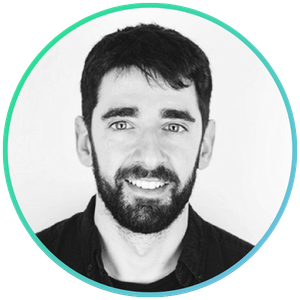
Pablo Botas
VP Product, Rare & Inherited Diseases
👉Book a Meeting
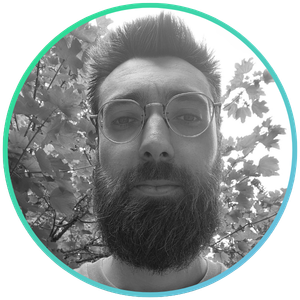
Alexandre Boulat
Data Science Engineer
👉Book a Meeting
Andrew Legan
Technical Field Application Scientist, North America
👉Book a Meeting
