Our 2026 Spring Release is our most ambitious release yet.
72 features and improvements, all IVDR certified from day one, so every advance reaches patients without delay.
Ploidy warning — Some abnormal ploidy has been detected. See Ploidy Results
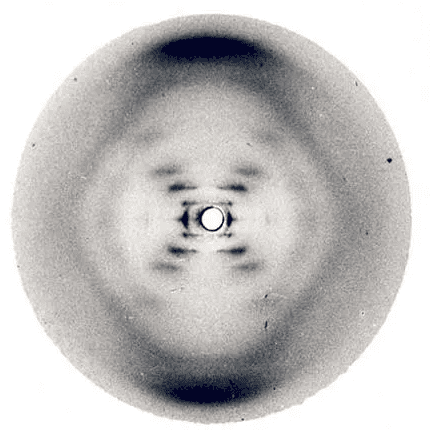
Photo 51 · 1952
A nod to the woman who saw it first
Rosalind Franklin
"Science and everyday life cannot and should not be separated."
Three quarters of a century ago, her X-ray captured the double helix. Today, SeqOne lets you read every twist of it — and spot the ones that matter.
✦You found a hidden chapter. Carry on, scientist.
DiagAI
ACMG
Type
Region
Size
Genes
Cytoband
Phenotypes
Location
COMPLETE
CNVs & SVs
end‑to‑end interpretation
A dedicated UP²‑SV AI score, interactive ACMG classification, and a purpose-built genome browser.
NATIVE
WGS-ready
STRs & Segmental
Duplications
A rebuilt Variant Knowledge Base, plus native callers for Short Tandem Repeats and Segmental Duplications.
SMARTER
3M+ variants
train the new DiagAI
Phenogenius expanded to 6,000+ genes. The platform sees more, prioritizes better, and never loses a signal.
A New Release Rhythm,
Built for Your Lab
Your lab needs stability for compliance, and speed for clinical impact. Now you get both.
Main Releases land three times a year on fixed dates. They’re stable, IVDR certified, and production-ready from day one. Preview Releases arrive regularly in between, giving you early access to upcoming capabilities in a safe environment before go-live.
Predictability for your compliance and operations teams. Speed for your clinicians.
Every feature,
at a glance
CNV & Structural Variants, Reimagined
A Complete Interpretation Experience
DiagAI Score for Large Variants: UP2-SV
Interactive ACMG CNV Scoring
SeqOne Browser: Purpose-Built for Large Variants
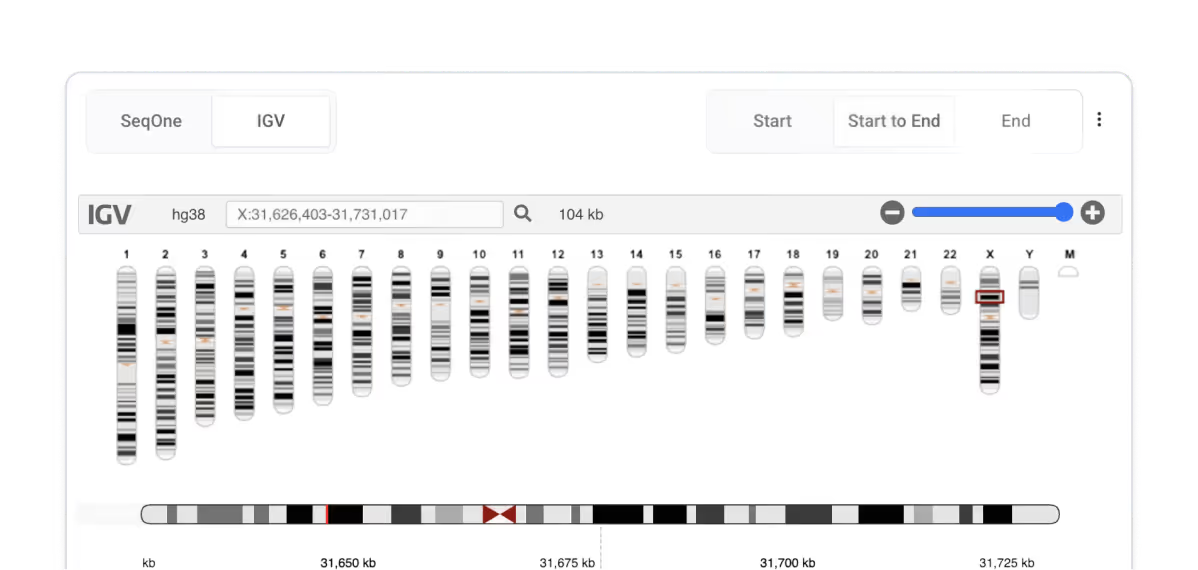
IGV Upgrades
CNV & SV Precision Interpretation
Account-Wide Frequency for CNV & SV
Lab Governance & Workflow
Protocol Module
Filter Preset Locking
Custom Variant Sections for Reporting
Reporting Workflow
Redesigned Settings Navigation
SeqOne Platform Public API v1
Germline Interpretation
Smarter, Deeper, Broader
Unified Compound Heterozygosity
Genotype & Inheritance: Cleaner Display
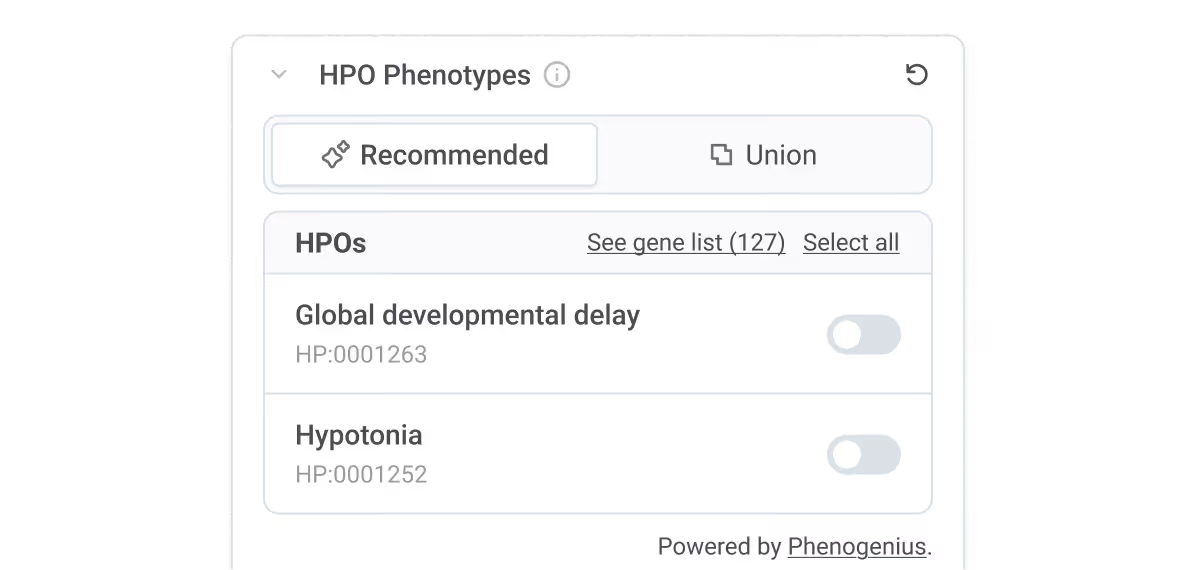
HPO Filtering: Two Modes
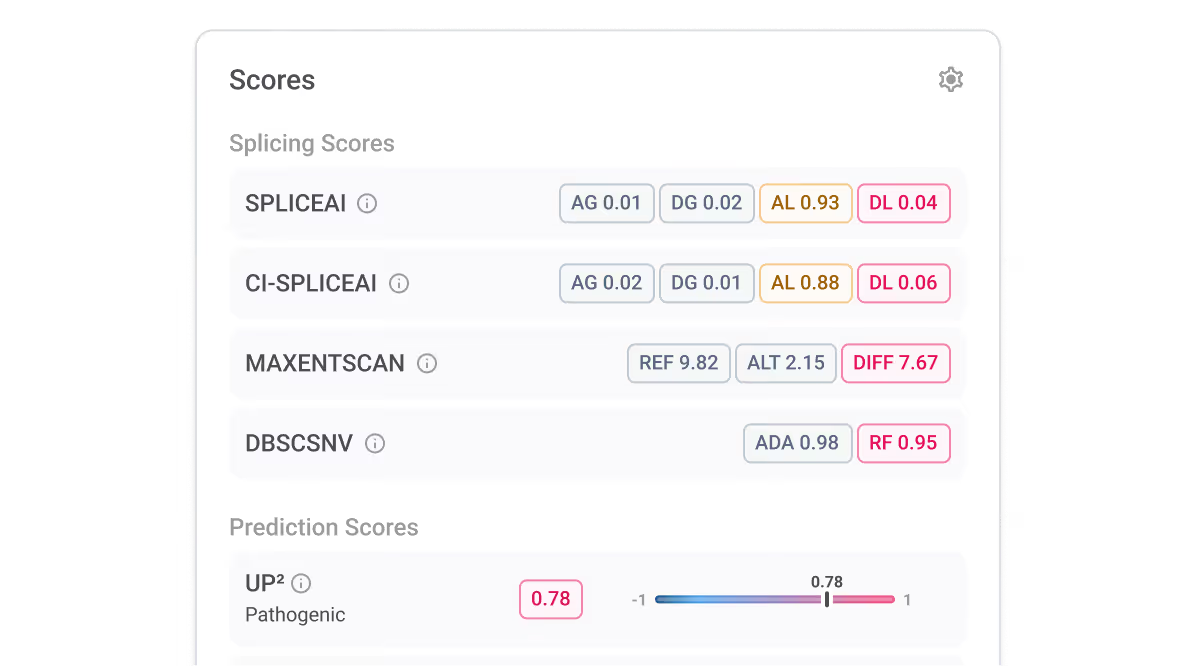
Pathogenicity Scores Upgrades
GermVar Tertiary: WES Capture Kit Selection
GnomAD v4.1 Constraint Metrics
Pipelines & Data
STR Caller & Viewer
SegDup Calling
Gene-Level Coverage Upgrade
Somatic Pipelines
Freshest Data
Turnaround Time gains
Variant Knowledge Base
A New VKB Experience
VKB Permissions
DiagAI, Extended & Reinforced
UP² Retrained
Phenogenius v3.1
DiagAI Germline White Paper
Quality & Compliance
60+ Quality fixes
IVDR Certified Worksets
Copy Number and Structural Variants,
Reimagined
From detection to classification: a completely new experience to interpret CNVs and SVs, bringing the best of what makes SeqOne powerful on small variants to the world of structural variants.
A Complete Interpretation Experience
Everything you love about SeqOne SNV analysis,
now for CNVs and SVs.
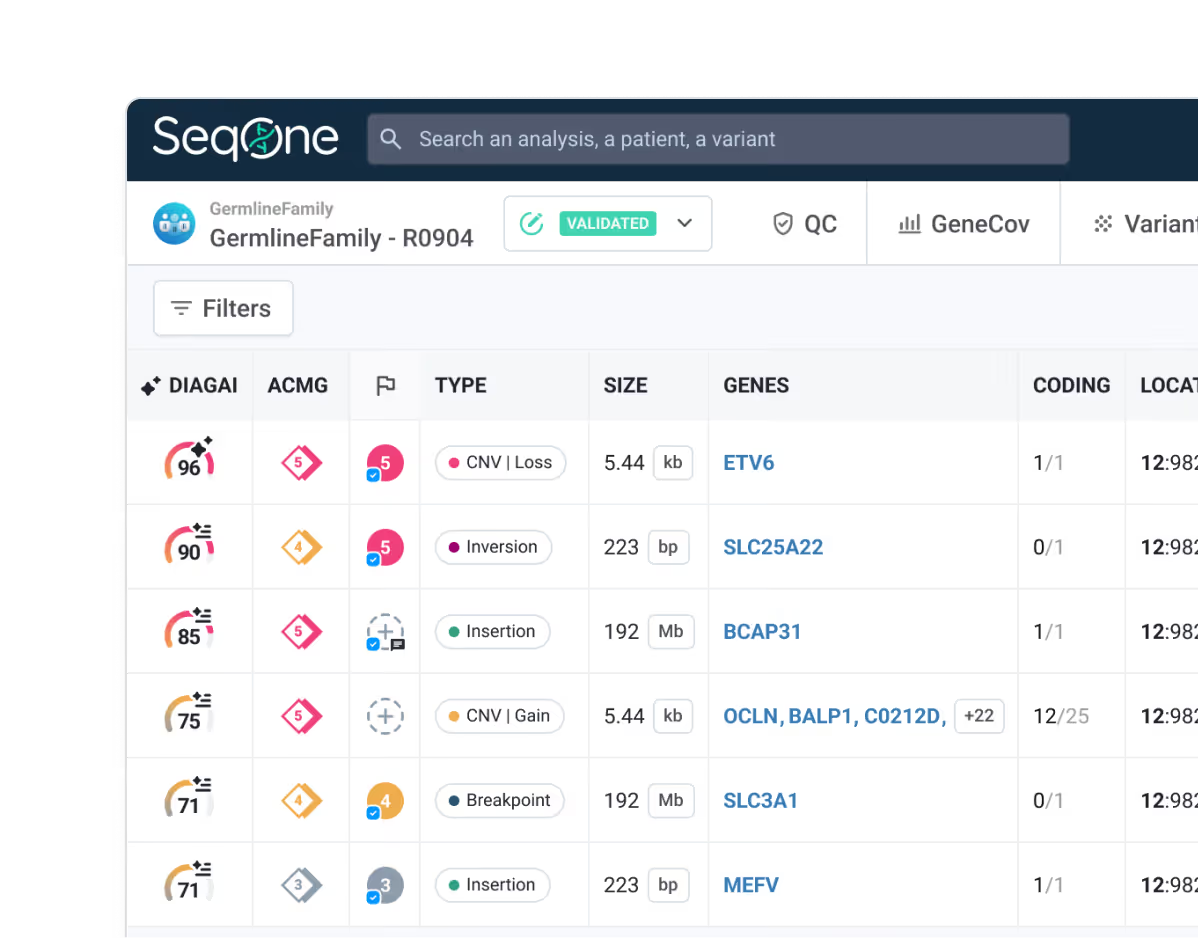
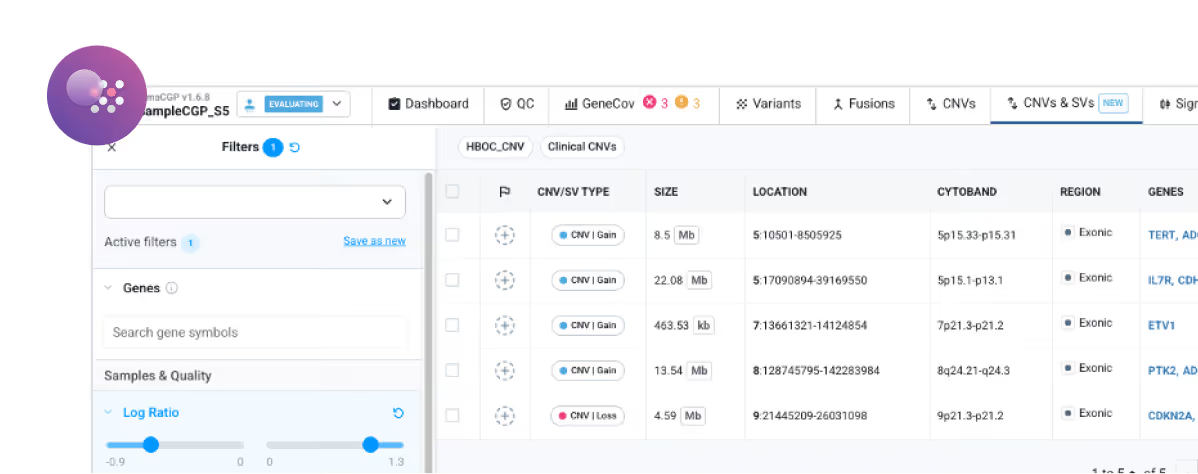
The Large Variant Viewer is now a full-featured interpretation environment on par with the small variant viewer. DiagAI sorting, filter presets, column management, bulk actions: all the tools that make SeqOne efficient for SNVs are now available for structural variant analysis.
DiagAI-powered sorting and prioritization
Column Manager for full table customization
Filter presets and Quick Access Bar to save and recall favorite filter profiles
Bulk actions for multi-variant selection
“Mark as Viewed” for interpretation progress tracking
DiagAI Score for Large Variants: UP2-SV
AI-powered prioritization, now for CNVs and SVs. A game-changer for exomes, genomes, and long reads.
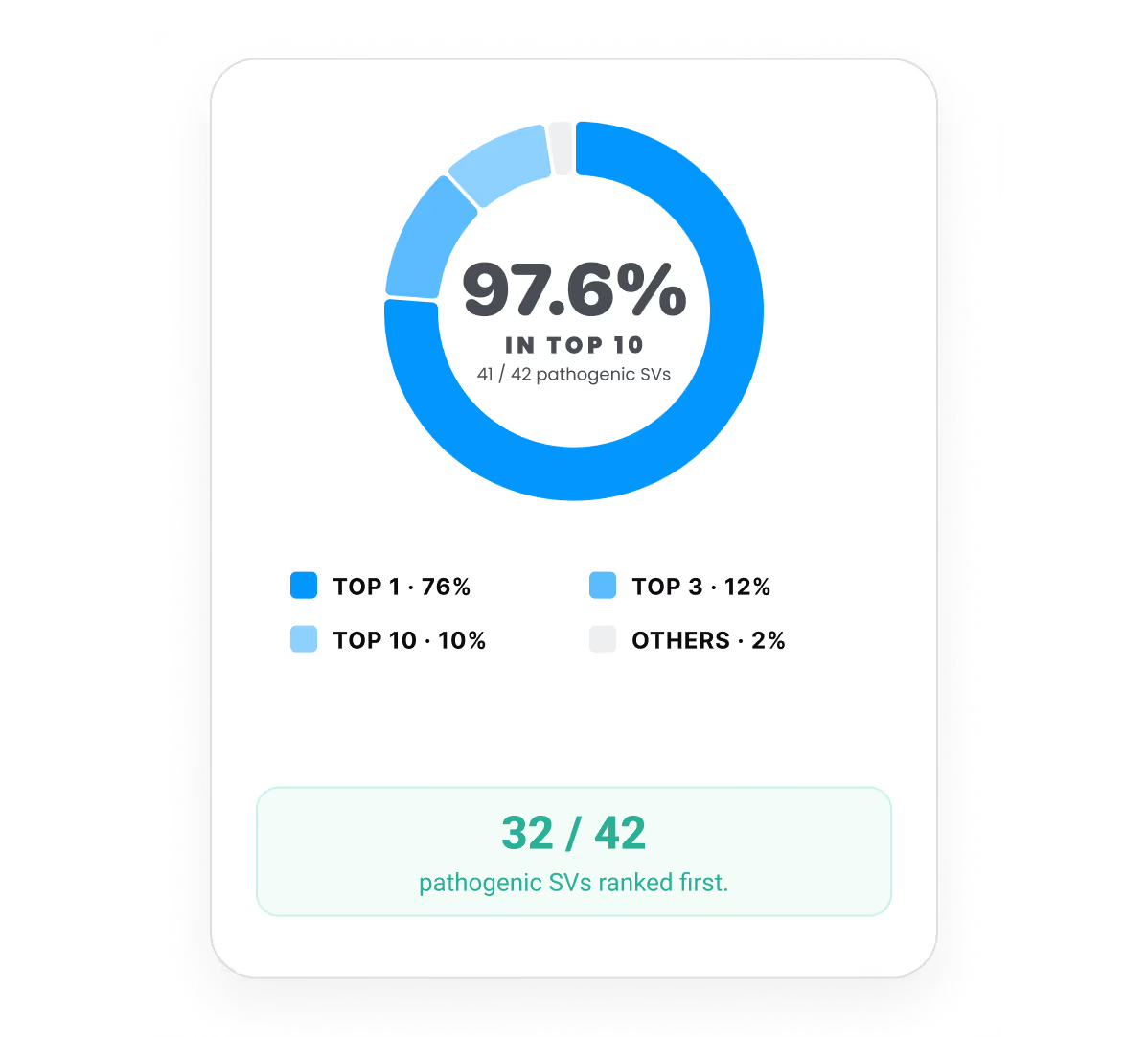
With UP2-SV, DiagAI now provides a dedicated pathogenicity score for structural variants — bringing the same AI-driven sorting and prioritization that accelerates SNV interpretation to the world of deletions, duplications, and beyond.
Dedicated model: UP2-SV trained on 55,000 clinical SV labels with 39 features across multiple biological dimensions
97.6% validation recall on internal clinical-SV dataset (41/42 pathogenic variants)
DiagAI sorting: Sort and filter structural variants by UP2-SV score, just like SNVs
Essential for high-volume workflows: Dramatically reduces interpretation time on WES, WGS, and long-read analyses where hundreds of variants need rapid triage
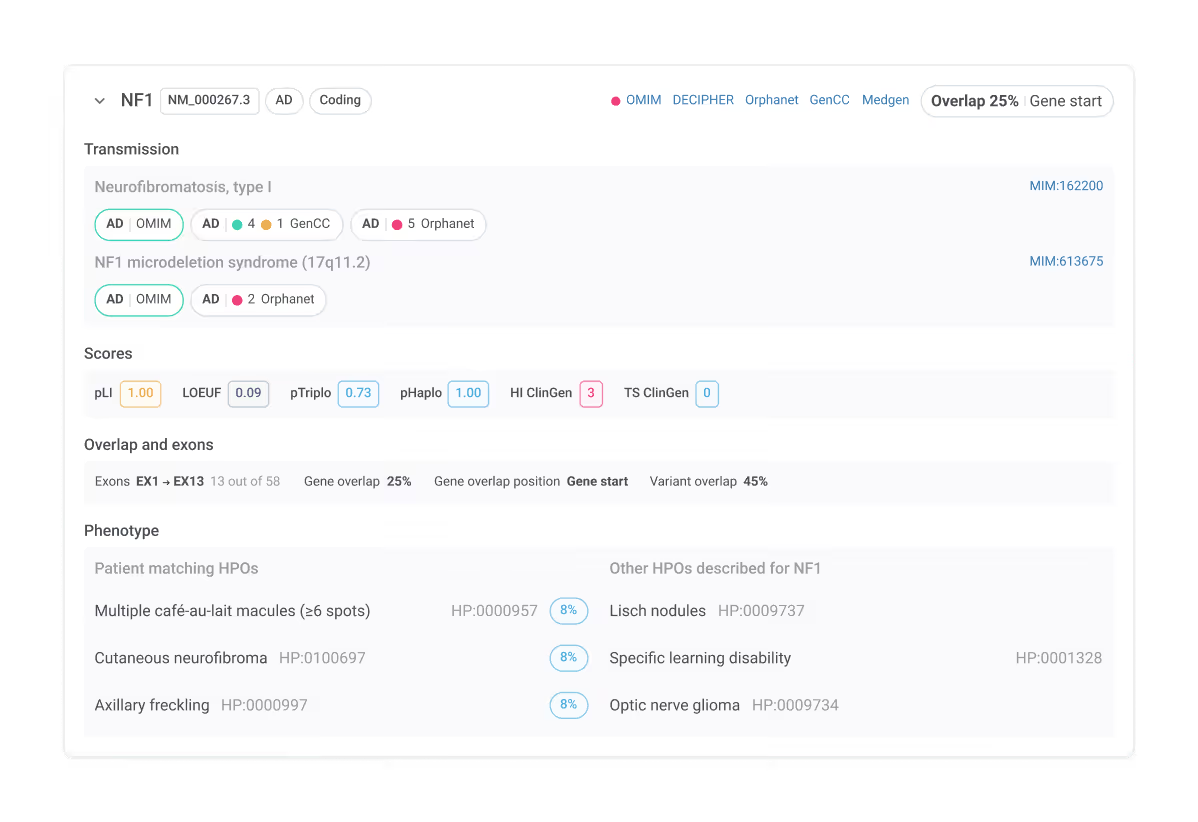
Interactive ACMG CNV Scoring
Classify CNVs with the same rigor as small variants.
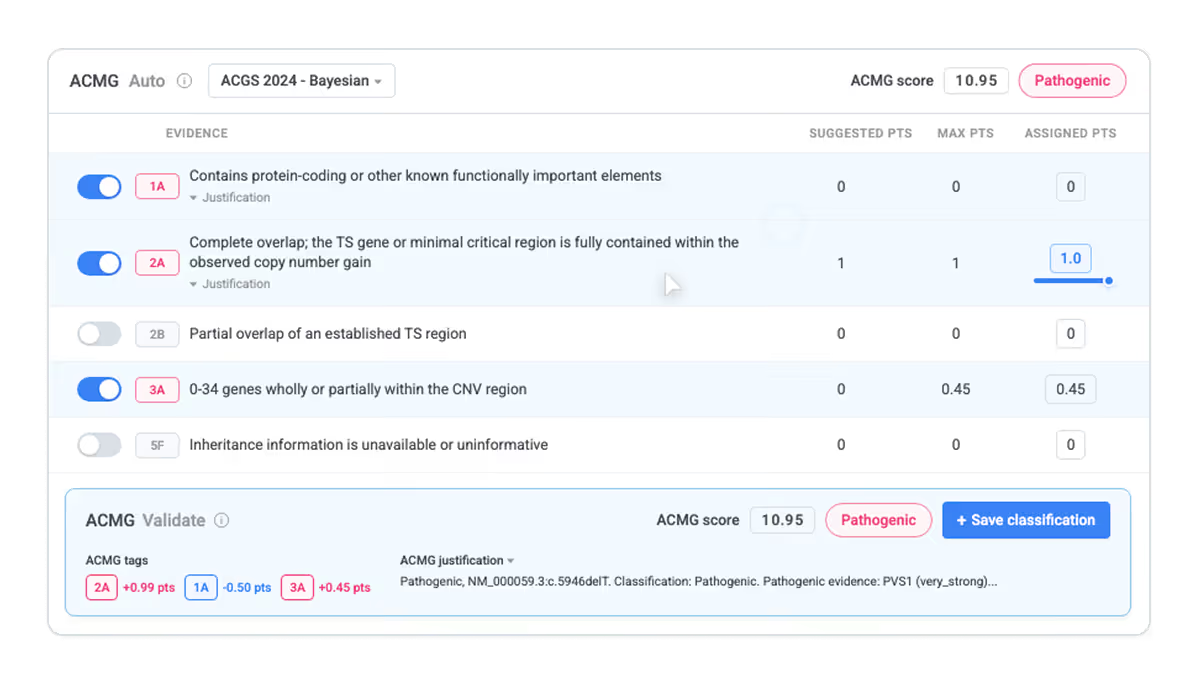
New “ACMG” tab for CNV Gain and Loss variants
Toggle criteria on/off, adjust evidence levels, and watch the classification update in real time
SeqOne Browser: Purpose-Built for Large Variants
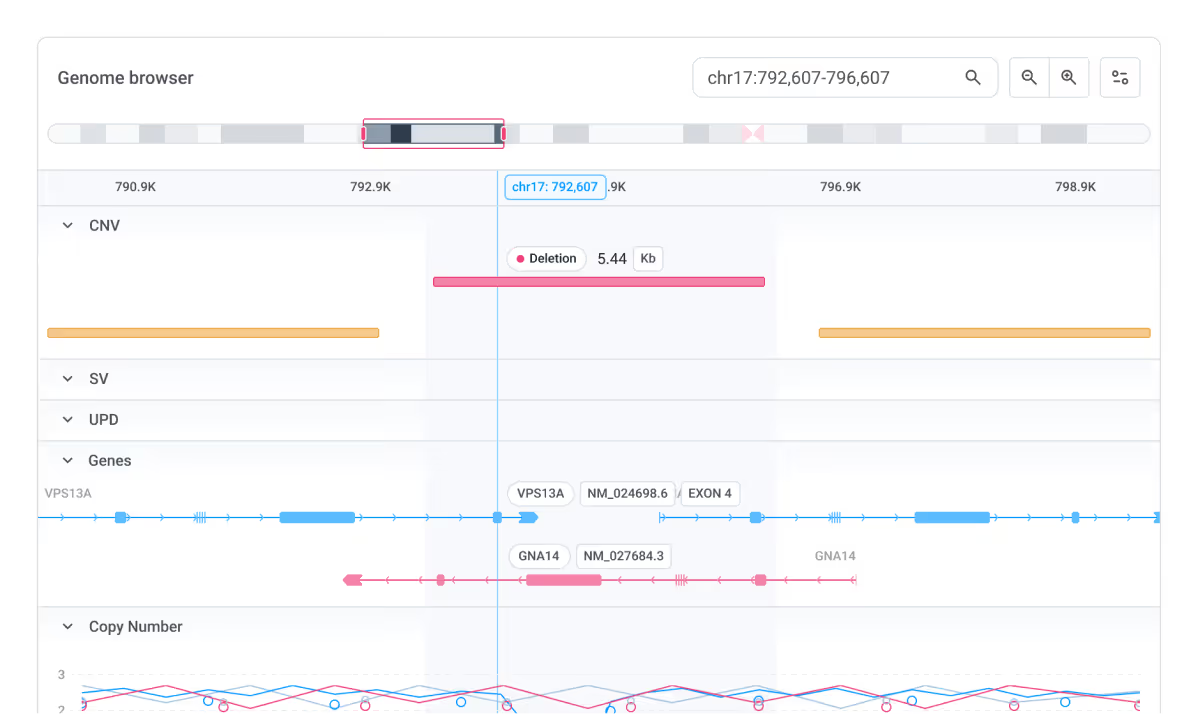
A new genome browser designed specifically for structural variant exploration.
Ploidy visualization by chromosome (WGS) with alerts on abnormal events
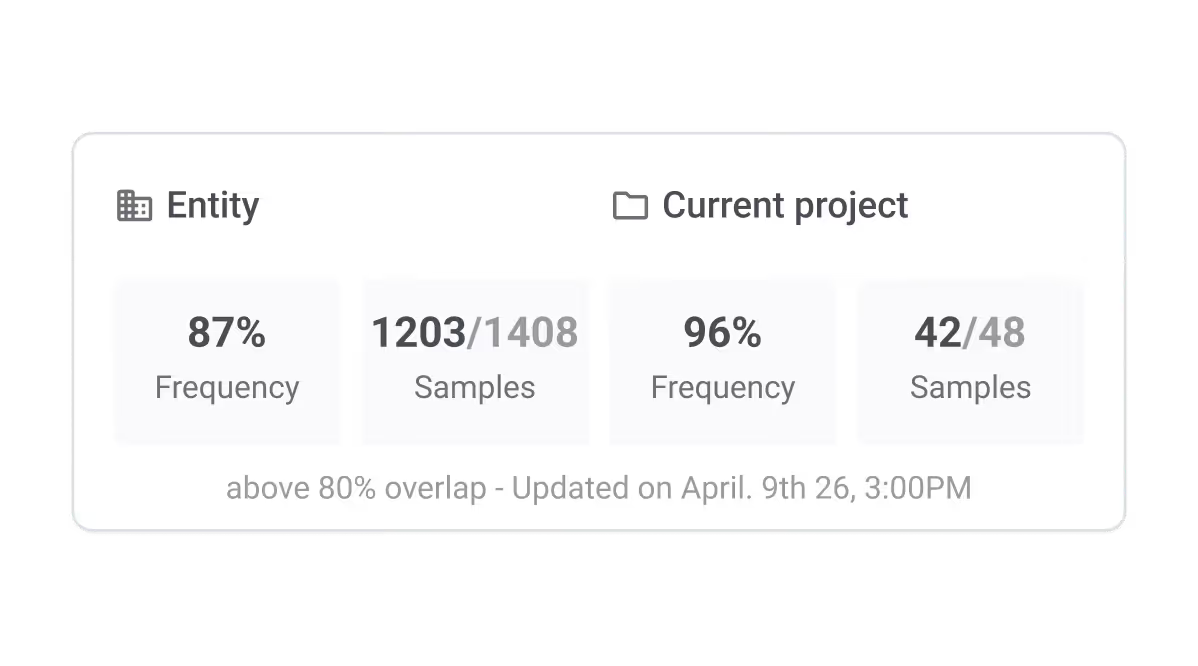
Account-Wide Frequency for CNV & SV
See how often a variant appears across your entire lab.
New Entity-Level SampleFreq column with frequency split by Germline, Somatic, aCGH
SampleFreq filter and sorting options available
Occurrences tab shows every project where the event appeared
One-click refresh updates project and entity frequencies simultaneously
What’s Next?
Large Variant analysis will remain a key focus area. We will continue improving our advanced viewers (filters, combos, exports, browsers tracks), support tertiary analysis visualisation and bring these capabilities to the somatic side of the platform.
Lab Workflow Configuration,
Taken Further
Standardize protocols, customize reports, lock configurations, automate with APIs: everything you need to run your lab your way.
Protocol Module
Define once. Apply everywhere.
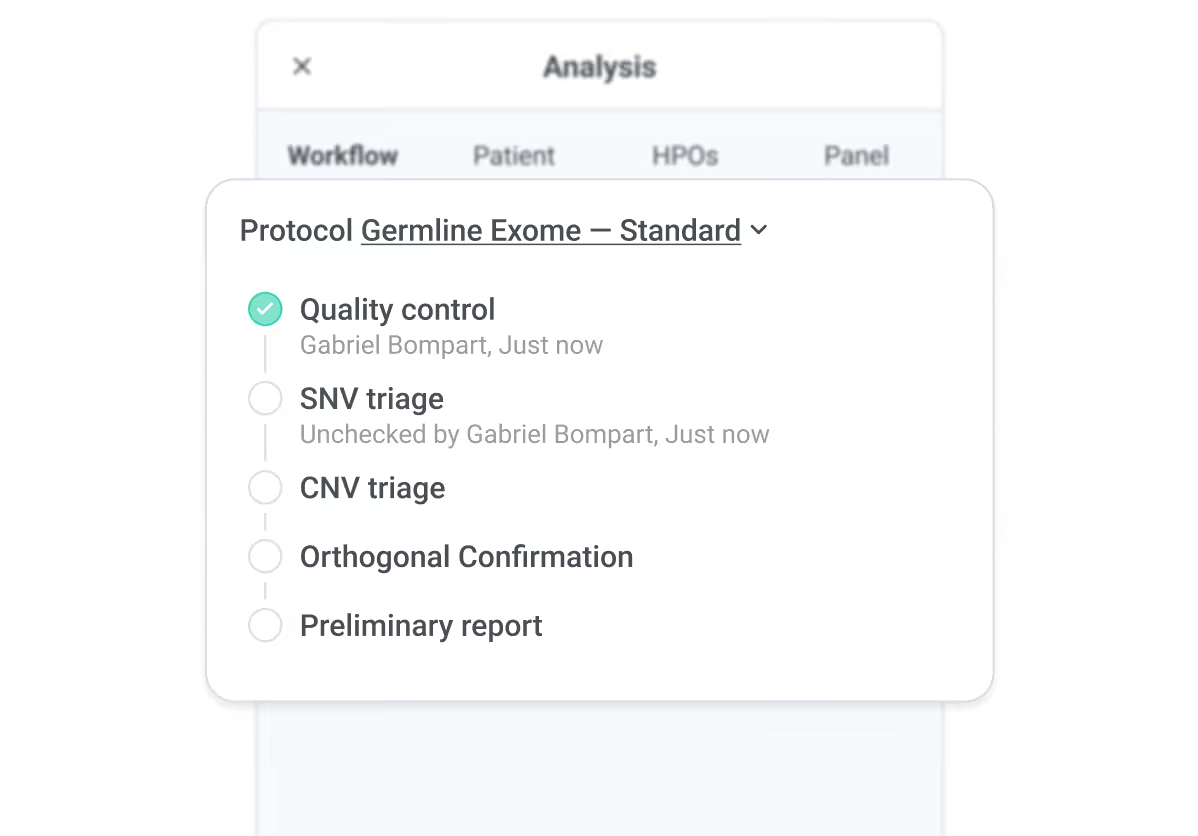
Build and manage reusable analysis protocols with checklists for your analysts from a dedicated tab in Entity Settings
Assign a protocol at analysis launch, configuration auto-applies in one click
Track progress with case-level checklists: every task is logged with user and timestamp upon completion
Manage all protocols from a dedicated tab in Entity Settings
Filter Preset Locking
No more accidental overrides.
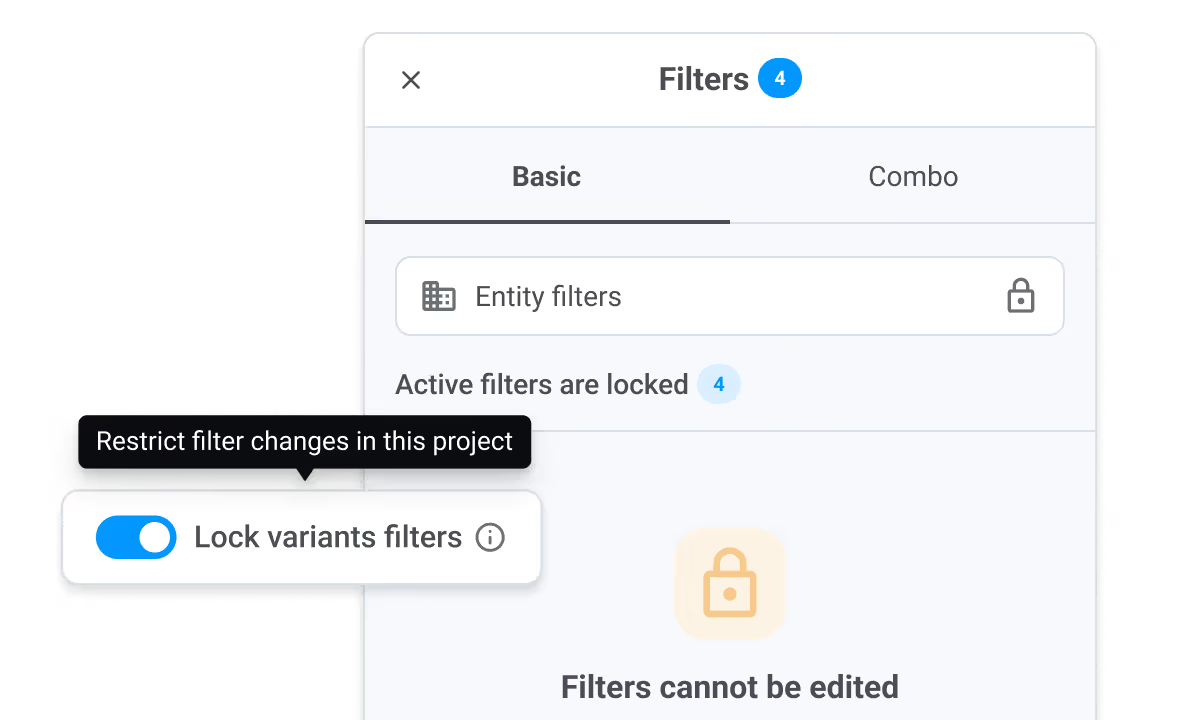
Lock filter presets at project-level, making them read-only for all users except admins
Set Combo presets as project default
Manage associated permission in the Entity Settings
Custom Variant Sections for Reporting
Organize your reports the way you think.
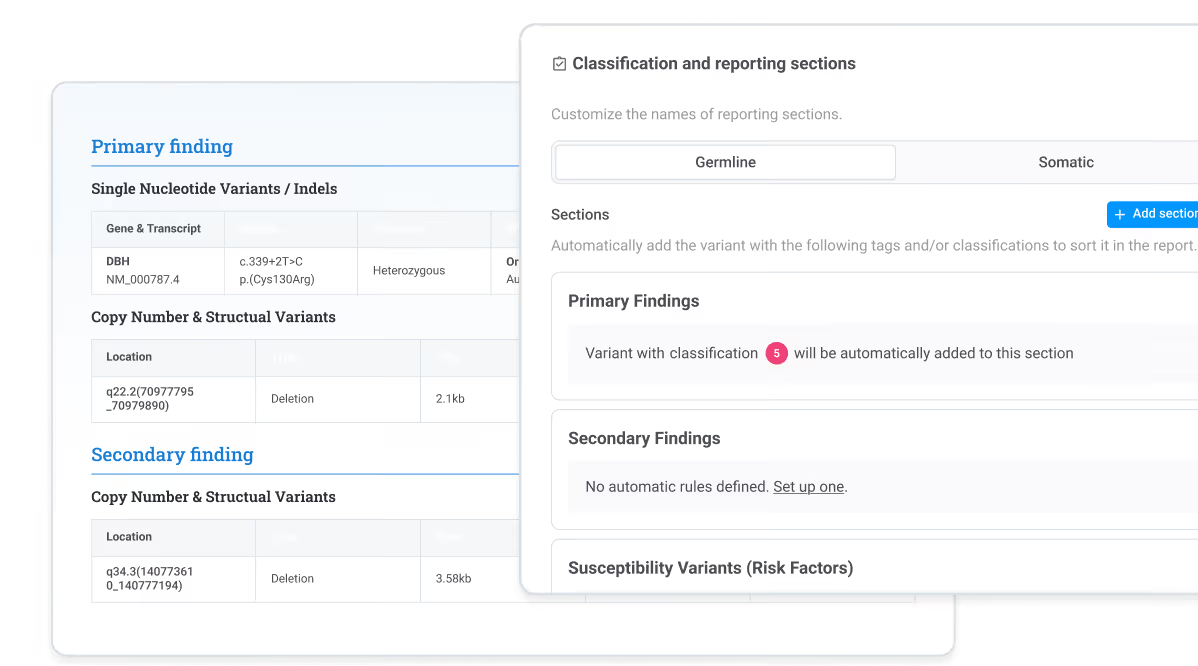
Create personalized variant sections using tags and pathogenicity class
Add sections to templates and order them via drag-and-drop
In your analyses, variants are automatically matched to the most relevant section based on settings. Manually reassign as needed!
Reporting Workflow
Preview before you finalize.
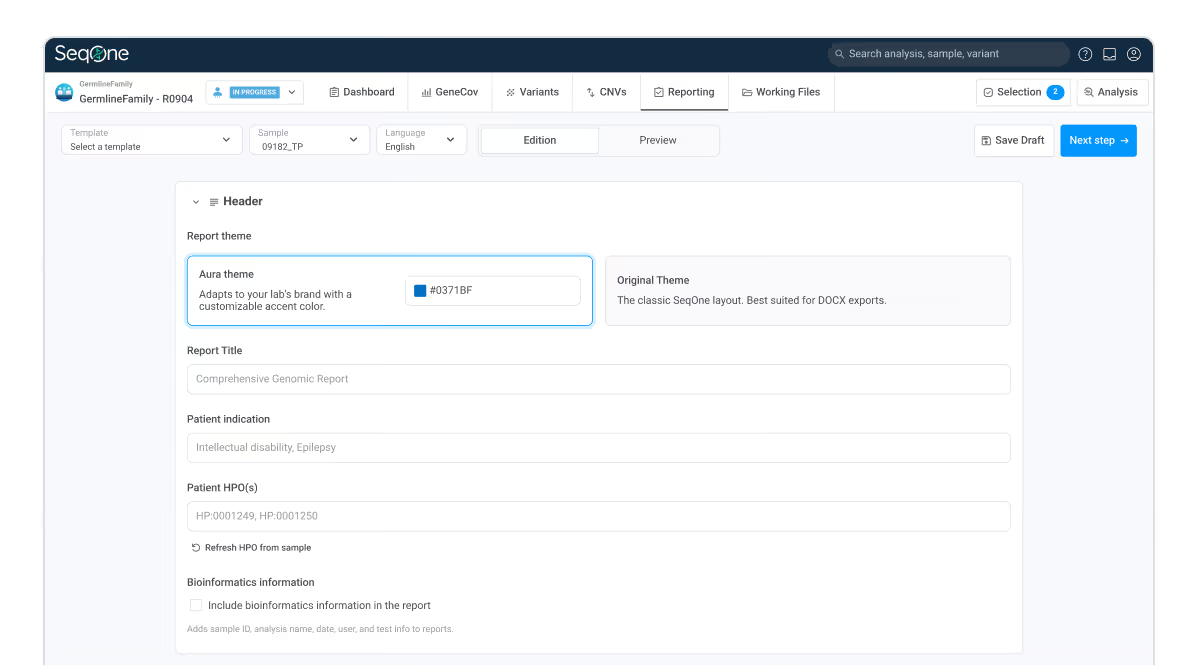
The report form is now presented in a single page instead of the three-tab setup, making it easier to review all fields
The preview for live report visualisation is just one click away at any time when creating a report
Somatic reports detailed information now include more relevant key details
Research Use Only watermark auto-applied in Preview mode
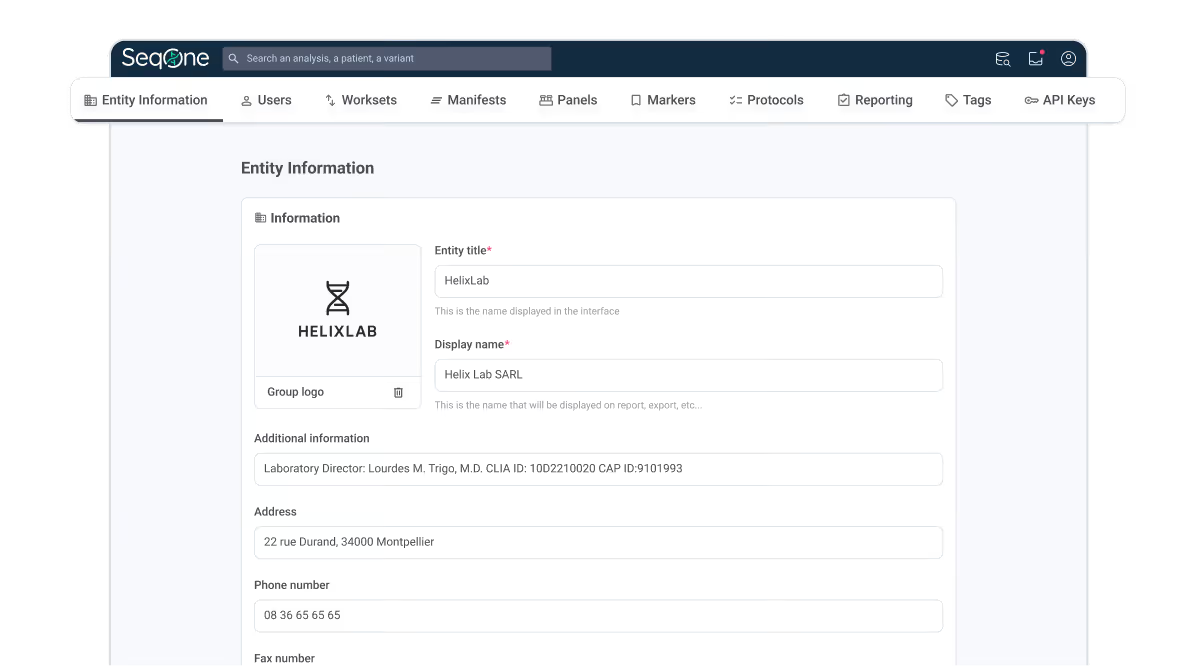
Redesigned Settings Navigation
Lab settings and personal settings — clearly separated.
Entity Settings (Lab-wide) carry the access to Entity information, User management, Panels, Protocols, Reporting, Tags and API Keys
All tables have been reworked to a unified look and can be sorted by column on top of keyword searching
My Account (Personal) is unique to each user: personal signature and password reset
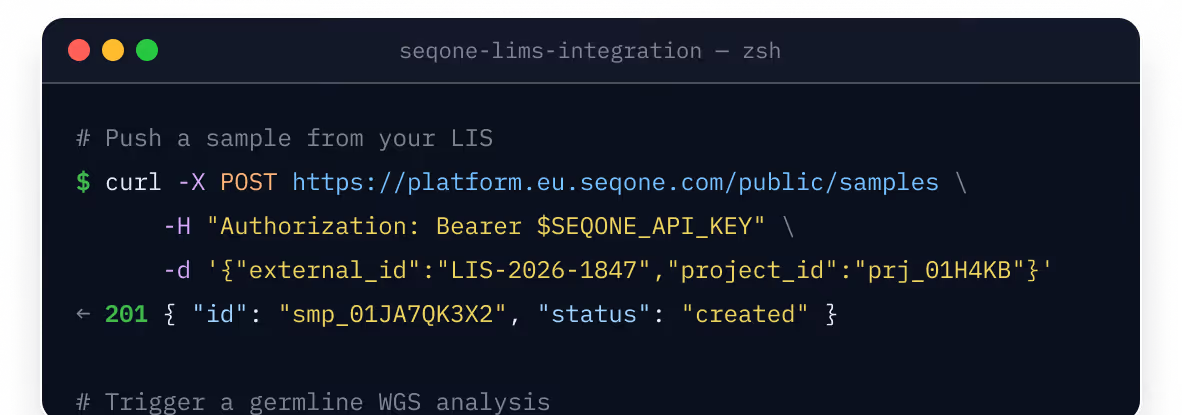
Automate your lab with SeqOne Platform Public API v1
A major step towards lab automation, and a continuous focus for the SeqOne platform.
SeqOne now offers a fully documented Public API (v1.30.13), enabling custom integrations, automated workflows, and seamless connections to your LIS/EHR, middleware, and internal tools.
12 endpoint categories covering the full analysis lifecycle — Samples, Analyses, Projects, Files, Worksets, Manifests, Users, API Keys, CNV Exome Models, Cytogenomics
API Key Management: Dedicated page in My Account to generate, manage, and revoke keys
Workflow orchestration: Connect SeqOne to your existing automation pipelines
Extended analysis status API: New statuses (including “rejected” and other closed states) accessible via API
What’s Next?
Coming next, we'll take lab governance further with revisited gene panel management experience, granular user permissions, configurable analysis statuses, new analysis list page, comments at analysis & variant level and double review workflows.
Your Variant Knowledge Base (VKB)
Rebuilt from the Ground Up
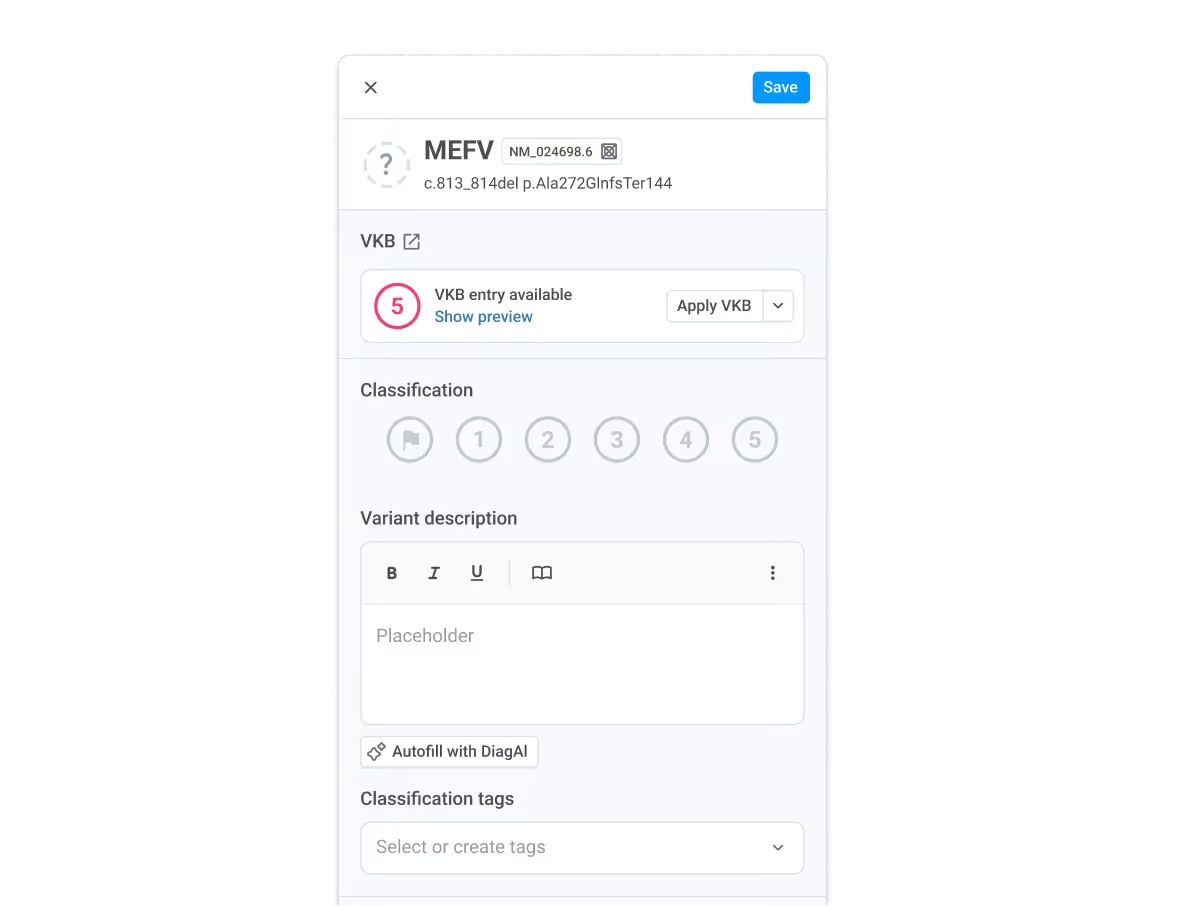
The Variant Knowledge Base has been completely re-engineered. Curate once, recall instantly. Now with structural variant support, and a foundation for much more.
A New VKB Experience
The Variant Knowledge Base has been completelyre-engineered. Curate once, recall instantly. Now with structural variant support, and a foundation for much more.
Short and large variant viewer integration: Short variants, CNVs, SVs, and UPDs fully supported for case-level classification and reporting, with automatic detection of similar event classifications across analyses.
Case vs. account knowledge: Two distinct data levels for short variants, each with dedicated columns and icons, change logs, and management permissions.
Instantaneous variant search access: Find any classified short or large variant in seconds.
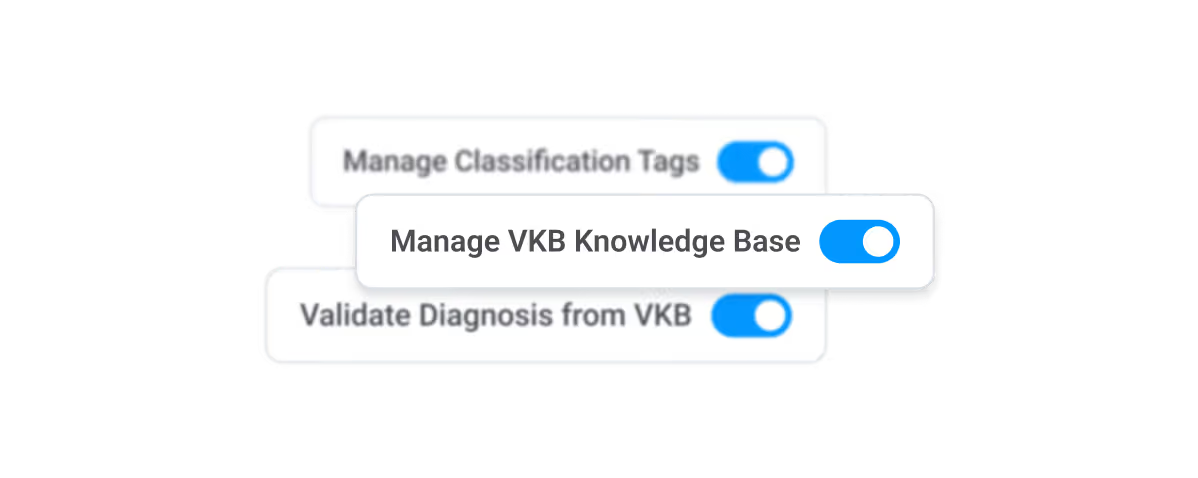
VKB Permissions
Control who curates your knowledge.
VKB related permissions have been updated to control who can create or modify entries.
What’s Next?
This major technical refactoring unlocks a new generation of capabilities: more variant types, richer classification data (ACMG, oncogenicity, actionability), and new features like exports. All will be areas of focus in future releases.
DiagAI
Extended & Reinforced
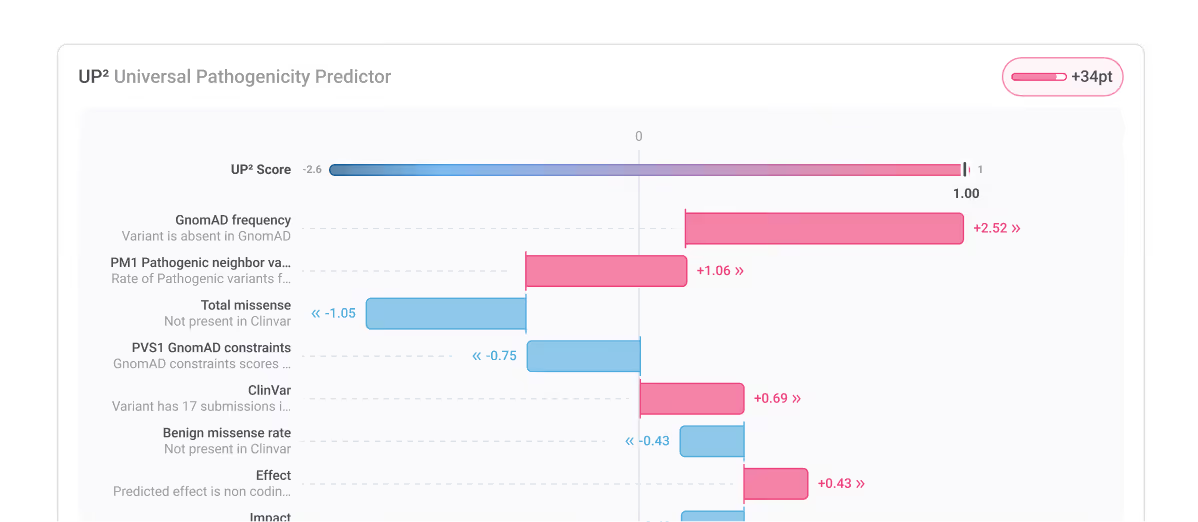
UP2 retrained on 3M+ small variants.Phenogenius expanded to 6,000+ genes. Non-coding variants finally prioritized.
UP² Retrained
More variants. Better predictions. Broader reach.
Training dataset expanded to 3M+ small variants
Enhanced non-coding variant prediction using GPN-MSA
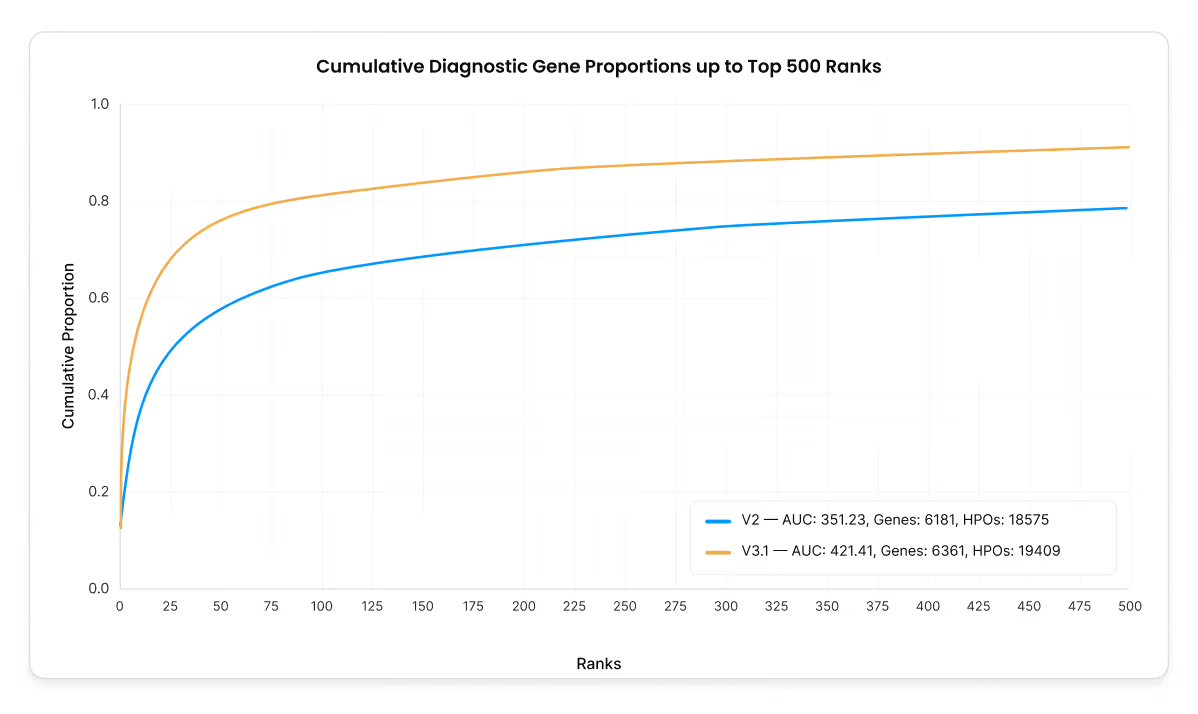
Coverage expanded to 6,181 genes and 19,409 HPO terms
~200 new genes and ~500 new terms
Integrates recent gene-phenotype associations from LitVar publications
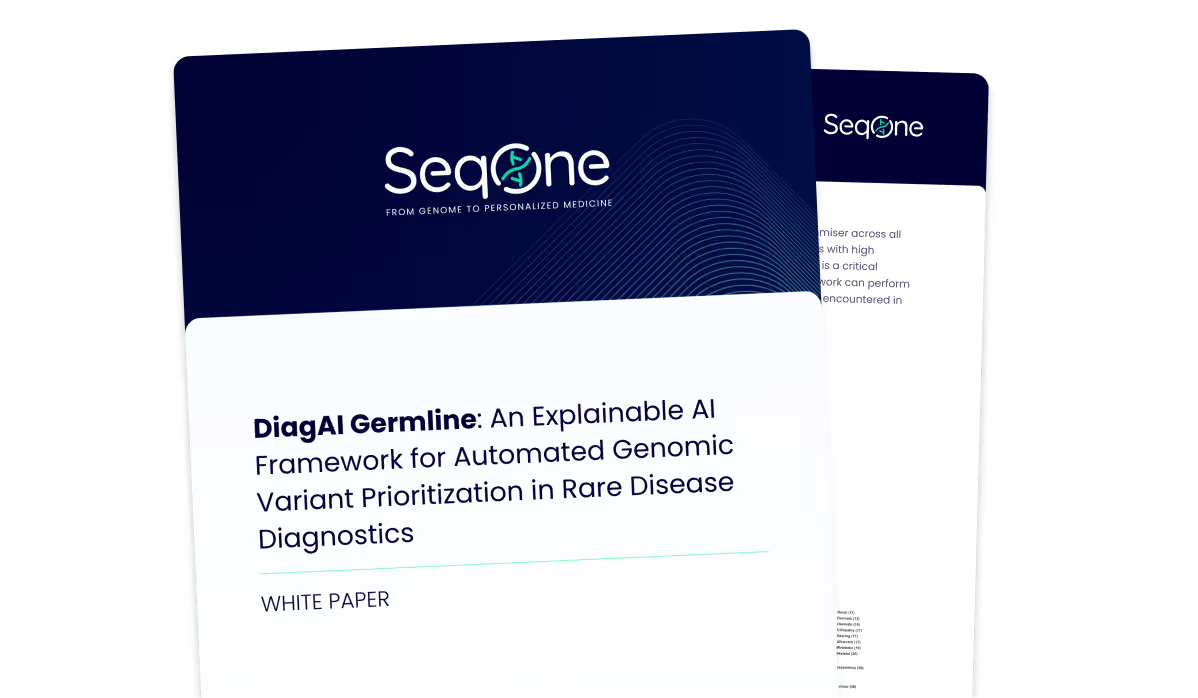
Go Deeper: DiagAI Germline White Paper
DiagAI Captures 98% of Causal Variants Within 10 Candidates Validated on Genomics England WGS Cases
Download the updated DiagAI Germline White Paper, which includes a full performance validation study on Whole Genome Sequencing data from the National Genomic Research Library, Genomics England
More training data, broader coverage, smarter priors. DiagAI will continue to evolve with your lab. Next up: autofill for CNV/SV interpretation and the Evidence Finder to surface supporting literature in seconds.
Germline Interpretation
Smarter, Deeper, Broader
Unified compound heterozygosity, smarter inheritance, and the latest constraint metrics.
Unified Compound Heterozygosity
Small variants + large variants in one view, one gene.
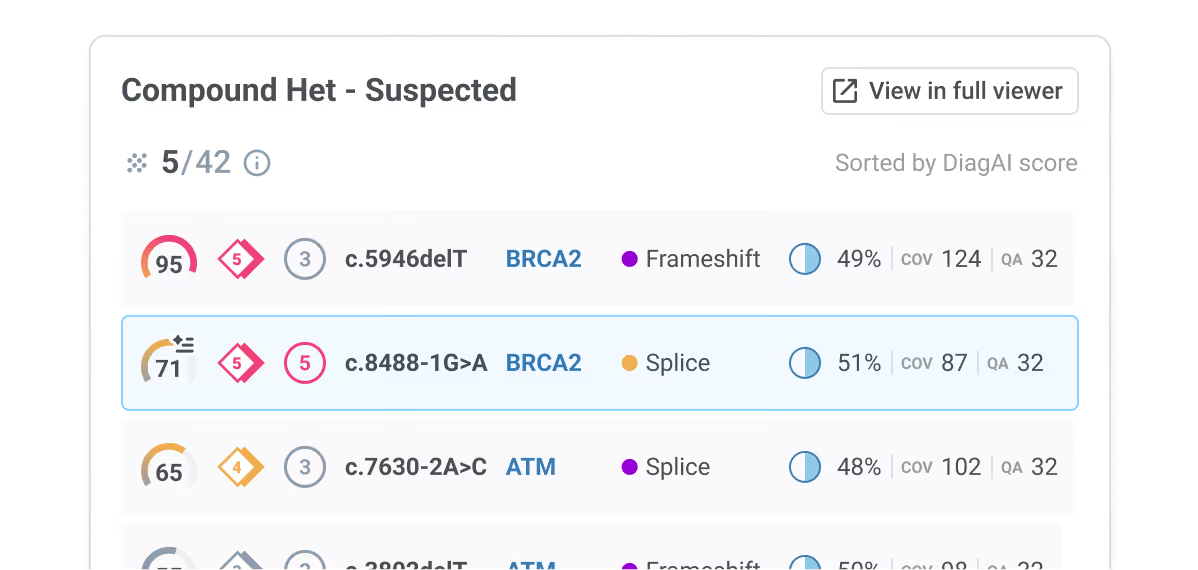
CompHet events from both Small and Large Variant Viewers merged into a single "Grouped CompHet" entry
Unified block with VAF, coverage, and quality metrics
Pre-filtered to "DiagAI CompHet Suspected" variants
"View in Full Viewer" for deep investigation
Genotype & Inheritance: Cleaner Display
Only show what’s complete. No more partial data.
Refreshed genotype icons
Inheritance colors appear only with complete trios (patient, father, mother)
Sex chromosome inheritance uses user-provided metadata
Proper mendelian violation warnings for autosomal and sex chromosomes
Hemizygous label on X and Y for male patients (tooltip and report)
HPO Filtering: Two Modes
Balance sensitivity and specificity your way.
Recommended Mode: average of all gene-HPO scores, optimized cutoff for concise gene lists
Union Mode: OR logic, includes any gene with score > 0 for at least one HPO
Both modes powered by Phenogenius
Pathogenicity Scores Upgrades
Faster access to key pathogenicity predictors, now more visible and actionable across all variant viewers.
Scores Summary Block visually redesigned for quicker at-a-glance review
Numerical values of pathogenicity scores directly visible in both Small and Large Variant viewers
CADD and REVEL score filters available in both viewers
UP2 sorting option now available in both viewers
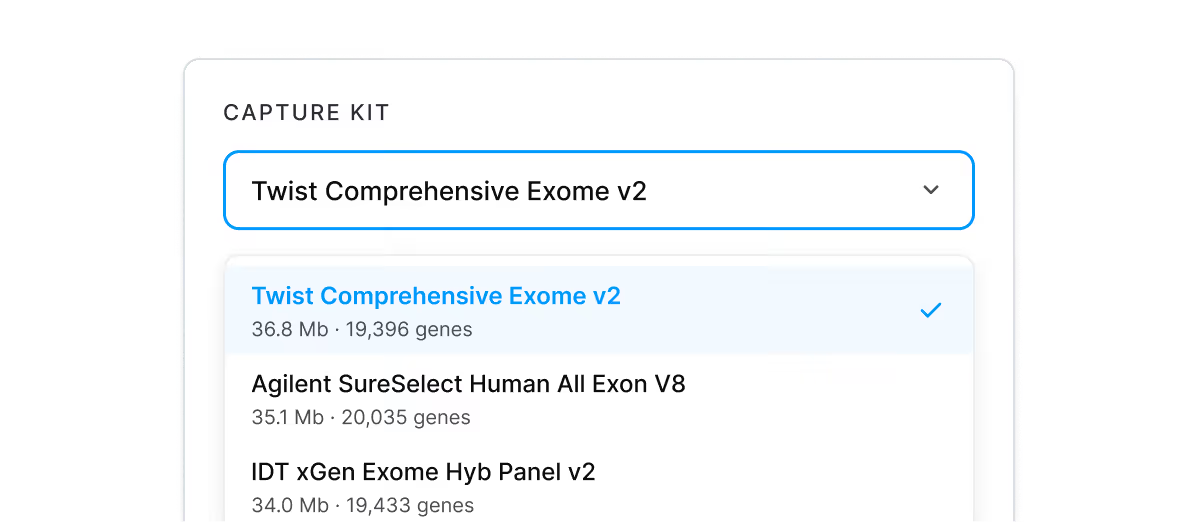
GermVar Tertiary: WES Capture Kit Selection
Select the BED that suits your process.
WES capture kit selection from a list of providers now available for VCF imports in GermVar Tertiary
Enables proper coverage and filtering context for externally processed samples
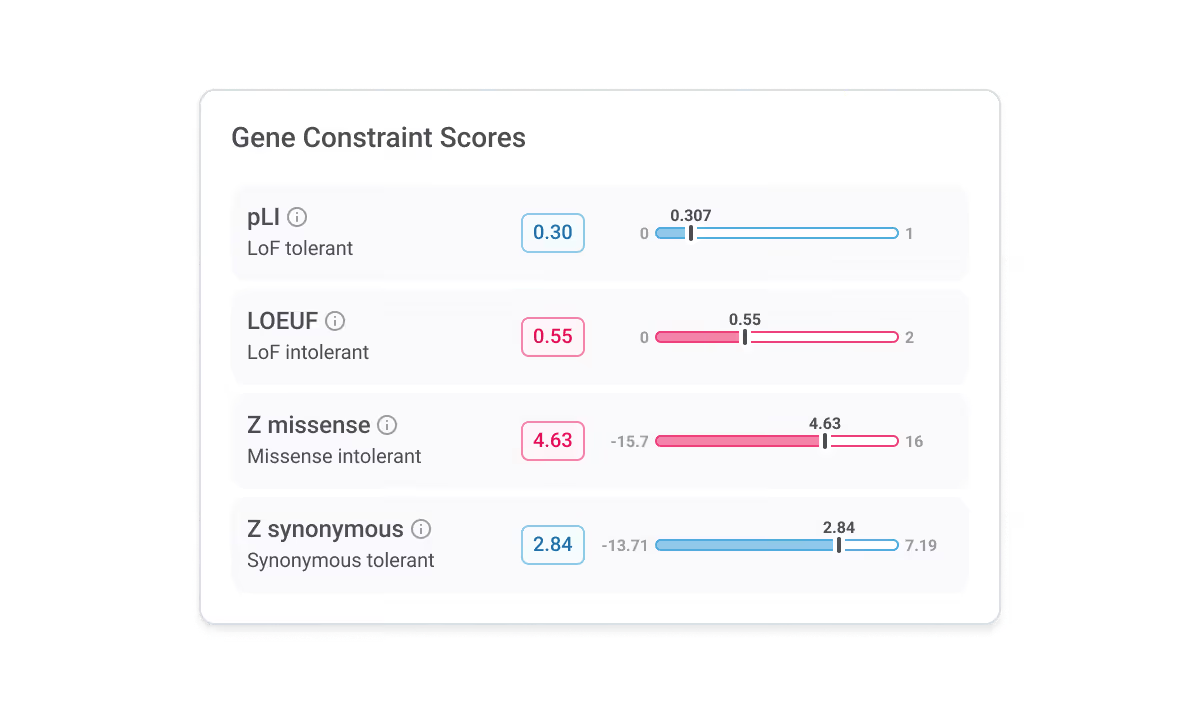
GnomAD v4.1 Constraint Metrics
Go beyond pLI, with the latest gene constraint scores.
Advanced Constraint Metrics now featuring LOEUF, Z-missense, and Z-synonymous scores from GnomAD v4.1
Precision Filtering: Use the new LOEUF slider to isolate LoF-intolerant genes with finer gradation than pLI
New Intolerant/Tolerant badges provide instant clinical context in the Variant Table
View all constraint scores grouped under the new "Constraint Scores" header
What’s Next?
Every analysis matters. Even our Tertiary users will soon load BAM files for better interpretation, especially for structural variants. We also plan to close the loop on STRs and let you report them as any other variant in SeqOne.
New WGS Callers
STR & SegDup, Natively
Short Tandem Repeats and Segmental Duplications: detected and visualized natively.
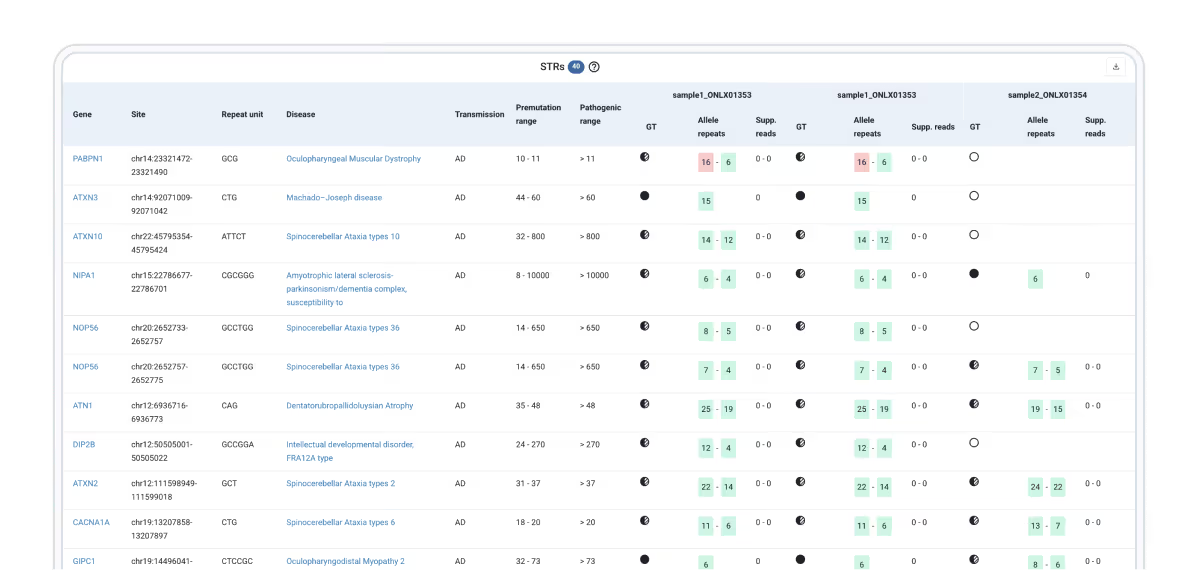
STR Caller & Viewer
Diagnose repeat expansion disorders directly in SeqOne.
Dedicated caller for Short Tandem Repeat detection
Specialized viewer with repeat units, mutation range, and disease context
Annotated with STRchive v2.16.0 covering 74 disease loci
Export as a tabulated file
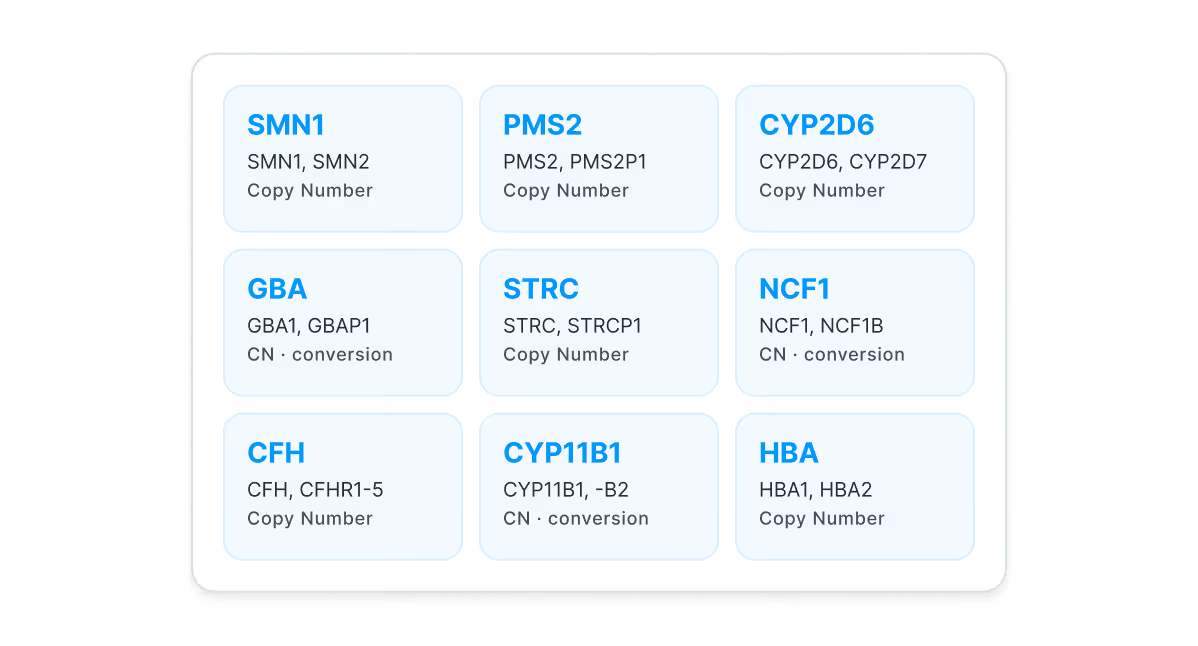
SegDup Calling
Clinically critical genes in homologous regions, finally resolved.
Automatically visualized as CNVs (gains and losses) in the CNVs & SVs viewer
What’s Next?
STR caller and viewer with the STRchive catalogue is just a start. Future releases will expand STR support with custom expansion/contraction catalogues beyond STRchive. Your thresholds will become your project-defined defaults.
Gene-Level Coverage
A Major Interface Upgrade
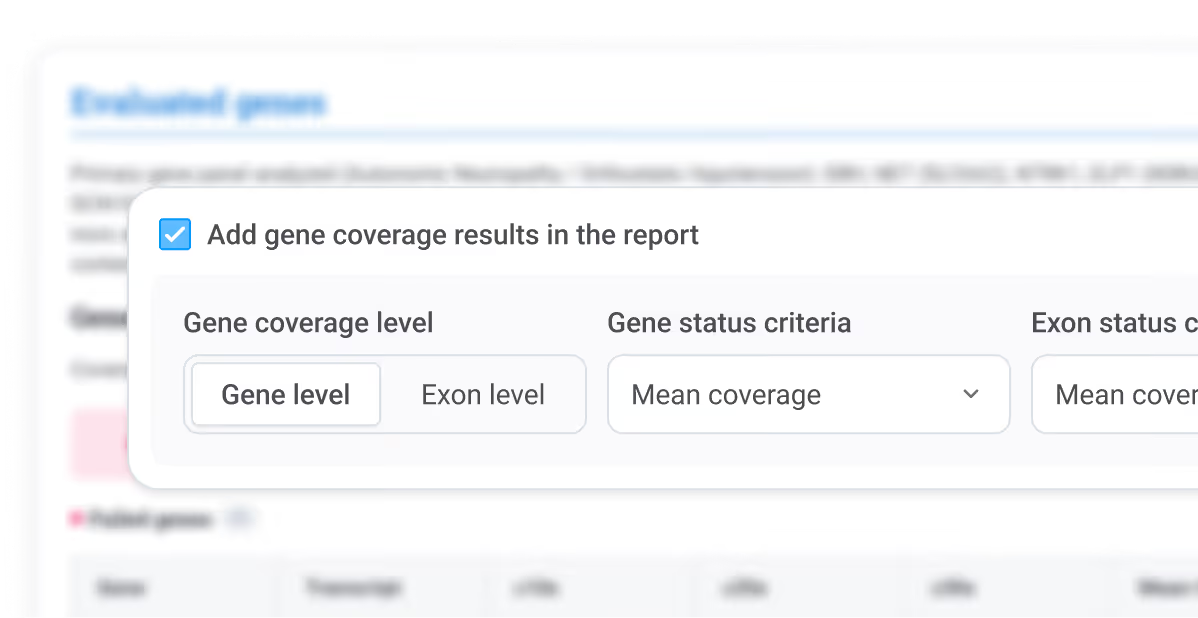
Report, assess, export, and share sequencing coverage at gene and exon level now for WES too.
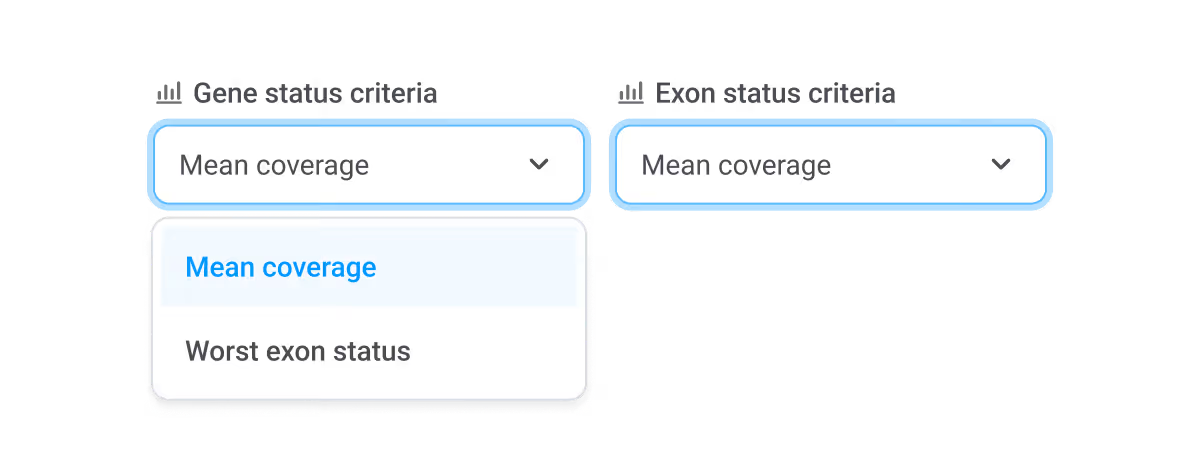
New coverage assessment options
Gene-level information at a glance
Average gene coverage as new default metric
Worst single exon still available through a drop-down menu
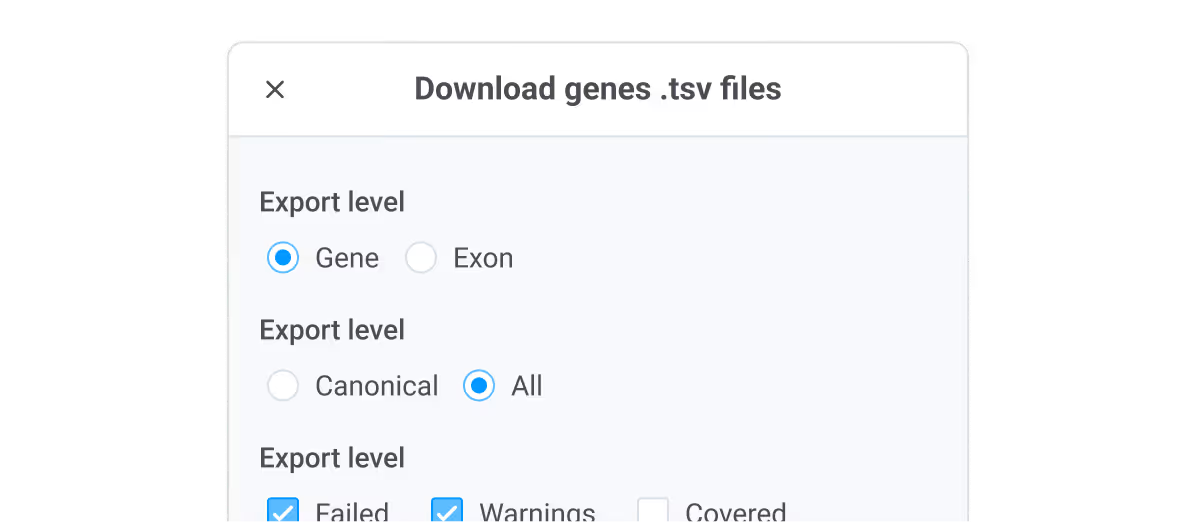
Smarter Export
Apply your filters and choose your level
Dedicated exports: gene-level and exon-level direct export to XLS, with active filters applied
Custom filtering : Gene panel, transcript and manifest filtering apply to your gene-level export
Coverage on Clinical Report
Summarized, refreshed look, and expanded
In clinical reports: gene-level coverage summaries are now included directly in your reports
WES reporting: coverage summaries now also available for Whole Exome reports (previously panel-only)
Gene panel filter can now be applied from report form to keep report manageable
What’s Next?
We will continue improving this functionality, for instance by giving you a quick overview of coverage at user-selected depth thresholds (e.g. 10x, 20x, 30x) or supporting WGS coverage analysis. We keep our ears open for more feedback.
Somatic Pipelines
Steady Progress
Liquid biopsy refinements, SomaCGP large variants, and performance gains.
SomaLBx
Liquid biopsy, tightened up.
Optimized pipeline post filtering
Filtered variants accessible in "discarded" file for transparency
Improved fusion detection sensitivity
SomaCGP
Cleaner QC, clearer copy numbers.
New QC indicators with clear ploidy and purity flags
CNVs & SVs viewer now reports logRatios alongside Copy Number
What’s Next?
Richer COSMIC data including variant prevalence across tumor types. CNV viewer redesigned for improved interpretation and filtering. Clinical actionability brought into somatic reports.
Freshest Data
Best Decisions
All major clinical databases updated to their latest releases.
ClinVar
2026-02
OMIM
2026-03
PanelApp
2026-03 (AU + England)
JaxCKB
2026-02
COSMIC
v103
STRchive
v2.16.0 (74 disease loci)
Pipelines & Turnaround Time
Faster results, from upload to interpretation.
Transparency and speed across the full analysis lifecycle.
FASTER
90%
Faster Sample Verification
Drastically reduced identity and quality checks.
TIME SAVED
3h+ saved
On WGS family analysis
Trio and duo processing (GermVar Family).
OPTIMIZED
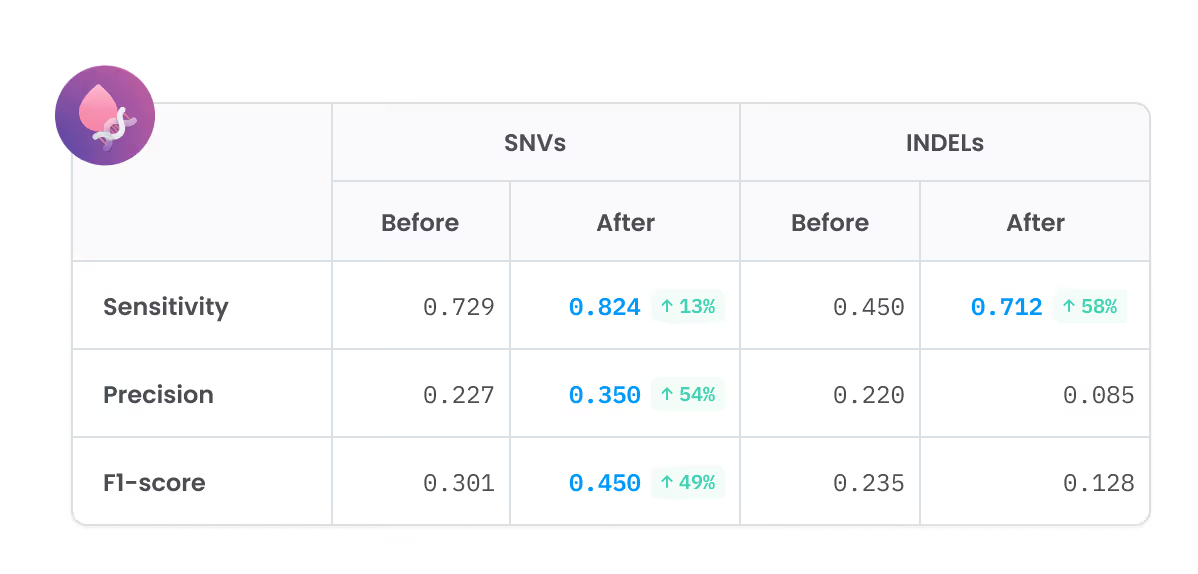
Alu Insertion caller
80% optimized
Reduced runtime, same detection quality.
TRANSPARENCY
Full filtering transparency
for tertiary pipelines
sample_discarded.vcf.gz lists every filtered-out variant with its exclusion reason.
QC
Up to 24x faster
QC Optimizations
Reduced processing overhead across all germline pipelines.
ACCELERATED
Sample Frequency
computation
Accelerated entity-wide frequency calculations
IVDR Certified Worksets,
Spring 2026
Every capability, certified for clinical use from day one.
Production-Ready from Day One
All workset versions shipping with the Spring Release are fully validated and IVDR certified.
Production-ready: every workset is validated and certified before it reaches your environment
12-month availability guaranteed: each workset version remains accessible on the Main environment for a minimum of 12 months
Seamless transition: Preview environments let you test upcoming workset versions before committing to a production upgrade
Workset
Legacy IVD Version
New IVD Version
CNVCapture
2.2
2.6
CNVExome
1.0
2.2
GermlineFamily
1.1
2.6
GermlineVar
1.7
2.6
GermlineVarLR
1.0
1.2
GermVar
N/A
3.12
GermVar Family
N/A
3.12
GermVar Tertiary
N/A
1.16
GermVar Tertiary Family
N/A
1.14
SomaCGP
N/A
1.6
SomaCNVCapture
2.2
2.4
SomaHemato
N/A
0.6
SomaHRD
1.2 & 1.3
1.5
SomaLBx
N/A
0.7
SomaMethyl
N/A
0.3
SomaMSI
1.0
1.1
SomaRNA
2.2
3.3
SomaVar
1.8
2.9
SomaVar LF
1.0
2.1
SomaVar Tertiary
N/A
2.4
The SeqOne Platform is an in vitro diagnostic medical device, CE-IVD Class C certified under IVDR. The company is certified under ISO 13485 for medical device manufacturer, and under ISO 27001 and HDS for information security and health data hosting.All certificates are available at trust.seqone.com.
Quality and user feedback
What we fixed
Every capability, certified for clinical use from day one.
60+
Quality fixes shipped
20
From your feedback
10
Product areas polished
Clinical reporting
12 fixes
✓
aCGH last evaluation now reflected in clinical report
✓
pLI values now correct in CNV reports
✓
ID Check tab restored for family analyses (v3.11)
Variant analysis & CGH
18 fixes
✓
Patient sex now factored in CGH sexual chromosome CNVs
✓
ISCN nomenclature accurate for autosomal CNV deletions