Which sequencing data can I use?
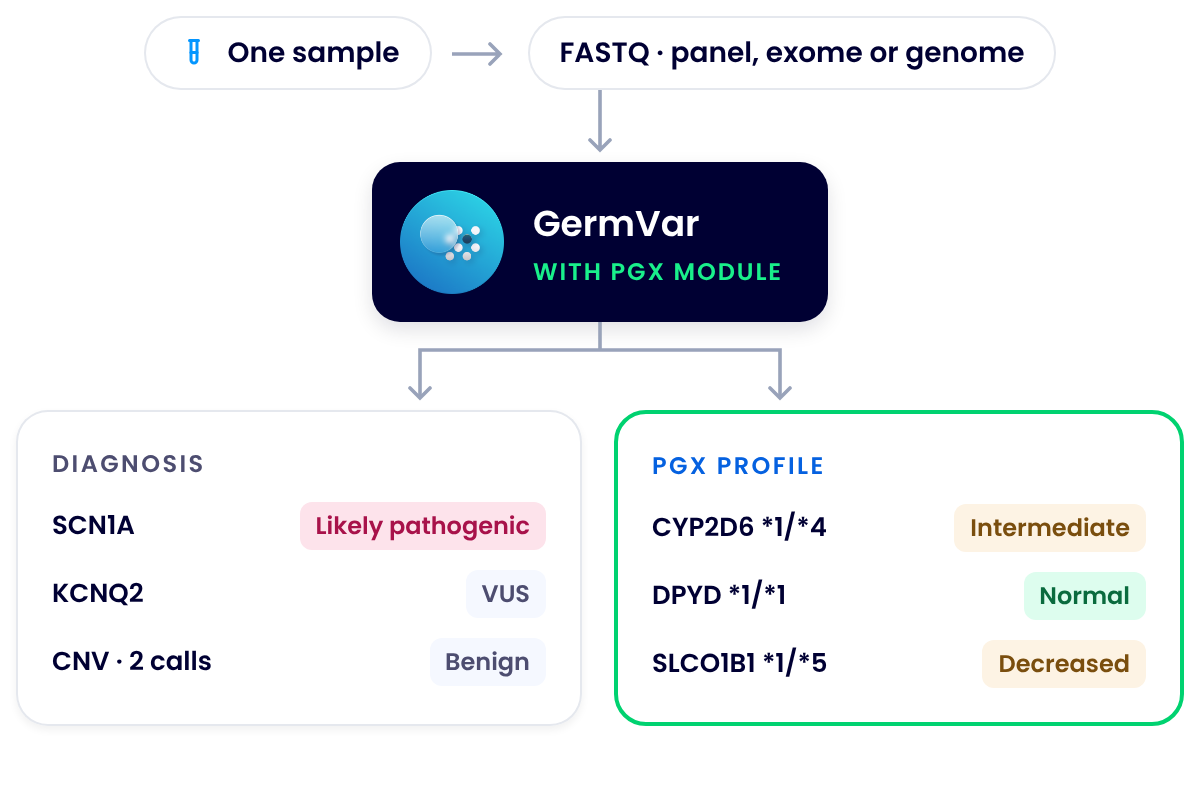
For now, SeqOne PGx supports short-read sequencing only: data from targeted gene panels, whole exomes and whole genomes, aligned to GRCh38. Long-read data is not supported yet. The module starts from the FASTQ files of your GermVar analysis, so there is no separate assay or pipeline to run. For a panel, the pharmacogenes you want to report must be in the capture design; we check this with you during setup.
How is PGx priced?
PGx is included at no additional cost with WES and WGS analyses launched in GermVar. You get the drug-response profile from the same sequencing and analysis you already run for the diagnosis, with no new sample or assay. For targeted panels and other setups, your SeqOne contact will find the right option for your lab.
Which genes and drugs are covered?
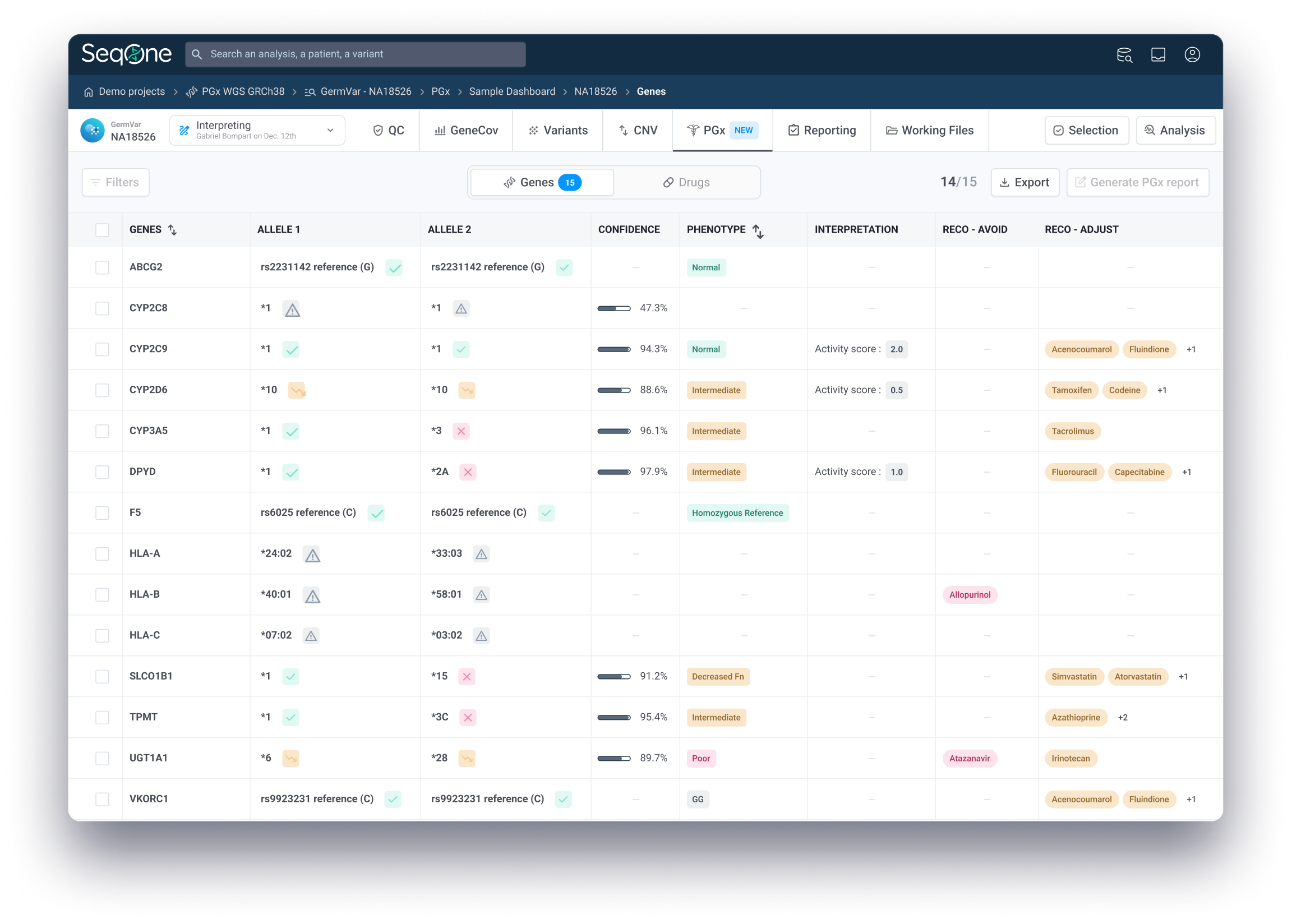
56 pharmacogenes plus HLA-A, -B and -C typing, more than 1,400 alleles with curated function and more than 160 drugs with recommendations from 11 sources: CPIC, DPWG, FDA, RNPGx, CPNDS, SEFF/SEOM, AIOM, AHA, ACR, CFF and AusNZ.
How accurate is it?
We validated the module on 56 samples against 4 reference truth sets: 98.9% genotype concordance, 99.2% phenotype concordance and 100% recall of the expected drug recommendations, above our 95% acceptance criterion. The validation summary is available on request.
How do you handle difficult genes like CYP2D6?
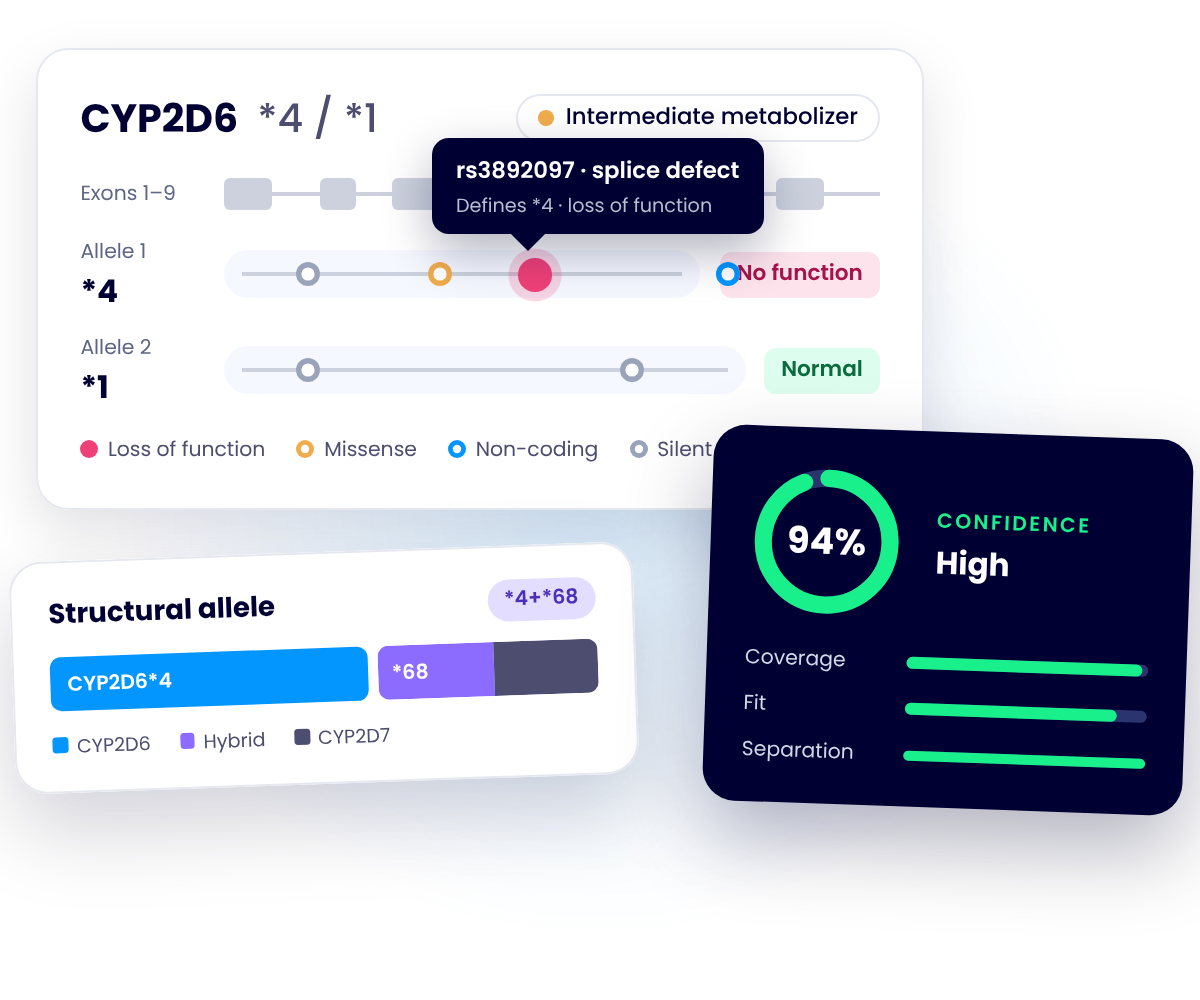
Copy number is estimated from sequencing depth first and used to constrain the allele search, so deletions, duplications and CYP2D6/CYP2D7 hybrid alleles are part of the call. Every diplotype comes with quality scores, and warnings are raised in plain view, for example when a novel major allele is detected.
Can I check the evidence behind each call?
Yes. Click a gene in the PGx tab to see its quality scores, each variant phased on its allele, and the underlying calls with genotype, depth and VAF, with a link into the variant viewer. Nothing is hidden: you review the call before it reaches the report.
Can I choose what goes into the report?
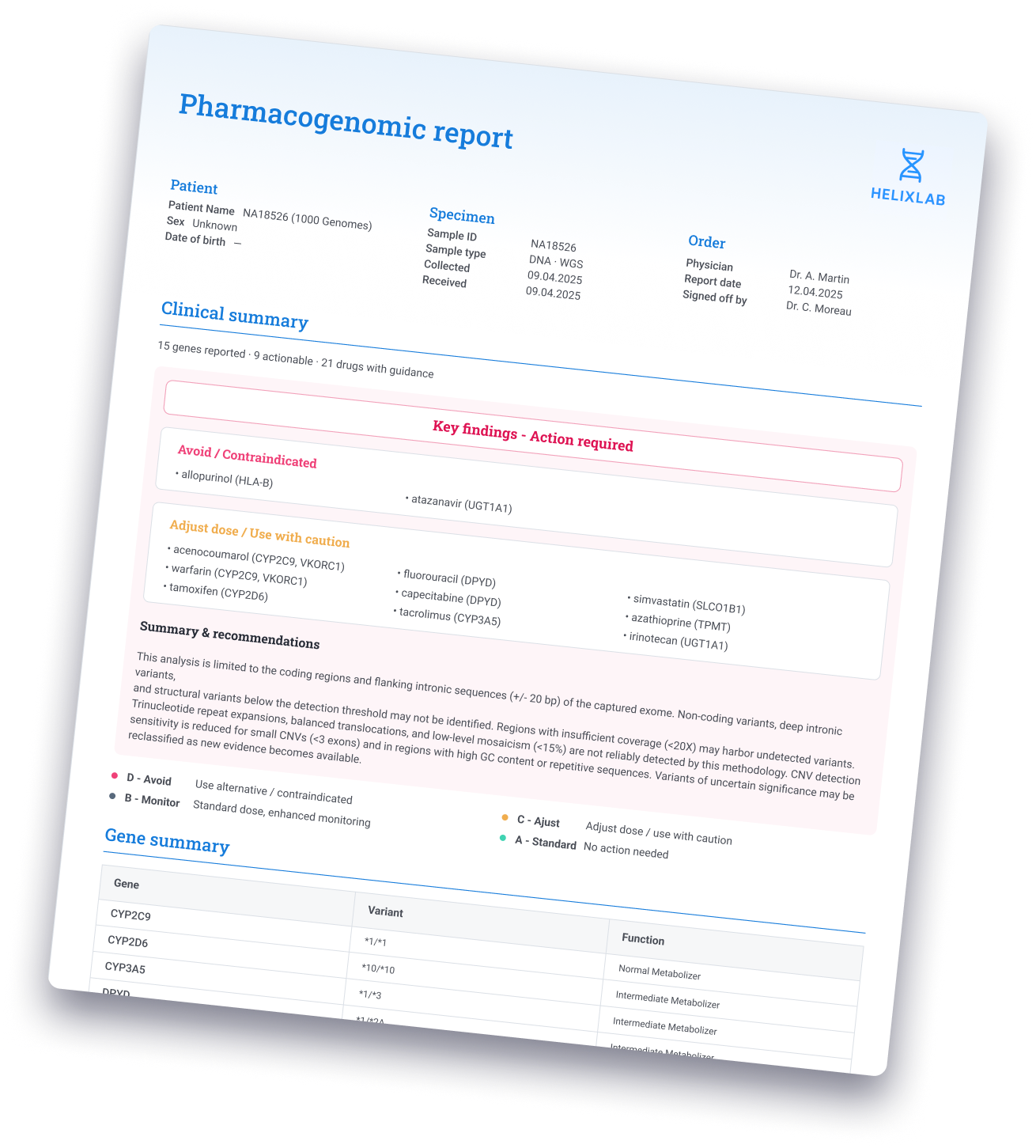
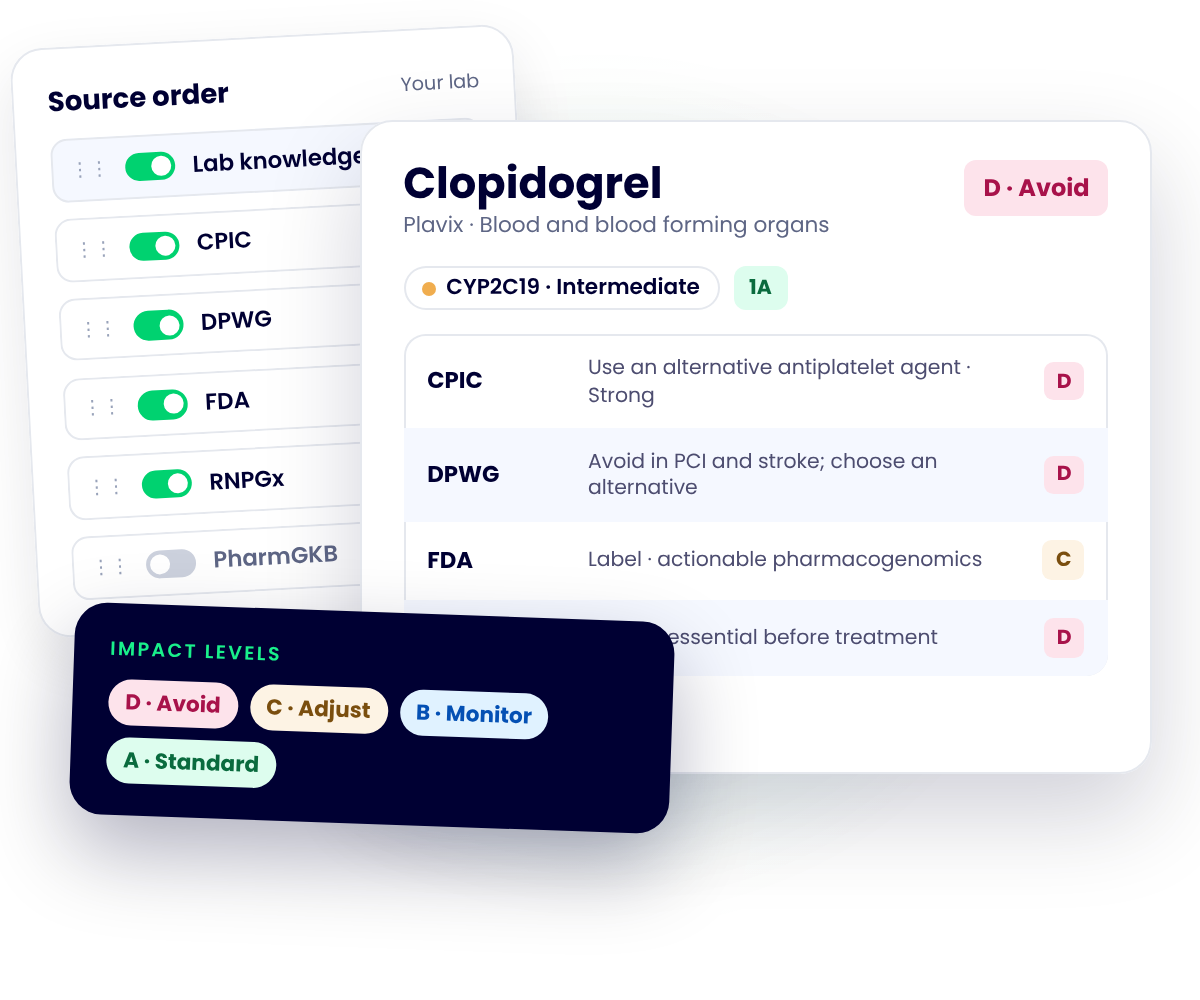
Yes. Before issuing, you choose the report type (a clinical report or a pre-emptive PGx passport), the genes and drugs reported, the guideline sources and their order, and the impact levels shown. The report carries your logo and colors, is signed in the platform and records the knowledge-base version used.
Can I add my laboratory's own recommendations?
Yes. Add lab knowledge and choose whether it comes before public guidance or replaces it.
Does it change my existing GermVar analyses?
No. PGx is an option you pick when launching an analysis. You keep QC, gene coverage and the variant viewers, and get a PGx tab on top, so one run can give both the genetic report and the PGx report. Analyses launched without the option run exactly as before.
Is patient data sent to external services?
No. The PGx knowledge base runs inside the platform, and no third-party service is called during the analysis. The knowledge base is versioned and its version is stamped on every result.
Can I use genotyping arrays or DRAGEN results?
This is on our roadmap: results from Thermo Fisher OpenArray, Agena MassARRAY, Pleno and DRAGEN will feed the same PGx tables and reports.