For three decades, a 60-year-old woman lived in the shadow of the unexplained.
Her symptoms pointed to a myopathy with a genetic origin, but the evidence remained elusive. She had undergone countless tests: genetic screenings for Pompe disease were negative, and while muscle biopsies showed abnormalities, they offered no clear cause. There was no family history to guide the doctors. Just thirty years of symptoms, and thirty years of silence.
Then, a single test changed everything.
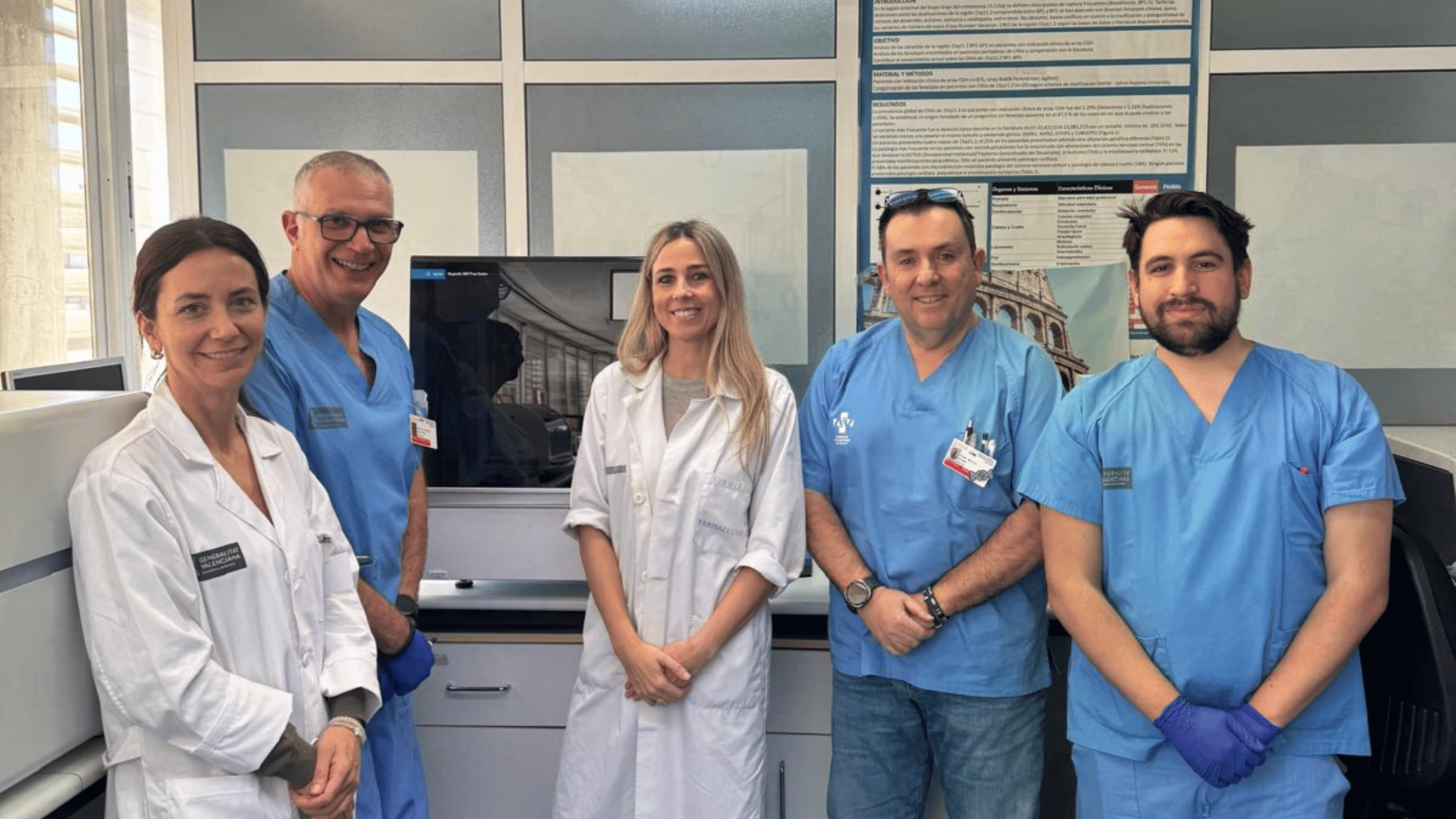
This is the story of how Hospital General Universitario Dr. Balmis in Alicante, Spain, revolutionized its genetic diagnostic capabilities to close cases just like hers. It is a story about how the right partnership - blending precise wet lab preparation with intelligent AI analysis - can turn genomic complexity into clinical clarity.
The Challenge: Scaling Without Losing Sight
As a leading genomic reference lab in the Valencian Community, the Hospital General Universitario Dr. Balmis faces a dual burden: high volume and high stakes. Their mission is to provide accessible testing for thousands of patients seeking answers for rare disorders.
However, as patient demand grew to over 1,000 exome studies, the lab faced a "trilemma":
- Scale: How to handle growing volumes without sacrificing the rigor required for rare diseases.
- Speed: Families are waiting. The team needed automation to accelerate turnaround times while meeting strict clinical regulatory standards.
- Sensitivity: Standard approaches were missing complex variants: the "needles in the haystack" that hold the key to a diagnosis.
The team realized that standard exome approaches weren't enough. They needed a partnership that could help them see what others might miss.
The Partnership: Agilent and SeqOne
To bridge the gap between data and diagnosis, the hospital selected an integrated solution: Agilent’s SureSelect Clinical Research Exome V4 (CRE V4)* paired with SeqOne’s AI-powered interpretation platform.
It was a strategic marriage of "Wet Lab" precision and "Dry Lab" intelligence.
- The Wet Lab: The hospital utilized Agilent’s CRE V4, which targets difficult-to-sequence regions and "mini-genomes," capturing non-coding pathogenic variants and mitochondrial genomes with exceptional sensitivity. To handle the volume, they automated the process using Agilent’s MagnisDx NGS prep system**, allowing for "walkaway" efficiency.
- The Dry Lab: The data then flowed seamlessly into SeqOne. Instead of manually sifting through genomic noise, the geneticists used SeqOne’s AI-driven variant calling and annotation.
"The laboratory’s workflow, which the hospital has evaluated and validated using the CRE V4 solution and the MagnisDx automation system from Agilent, provides shorter turnaround times," explains Dr. Elena García Payá, Specialist Physician in Clinical Analysis at Genetics and Pharmacogenomics Laboratory. "It integrates perfectly with the SeqOne platform, which offers fast analysis and continuous updates to its pipelines."
The Breakthrough: Where Technology Meets Care
The true test of this new workflow was not in the specs, but in the patients.
When the hospital revisited the case of the 60-year-old woman, the new system looked deeper than previous attempts. The combination of CRE V4’s superior coverage and SeqOne’s detection capabilities uncovered what had been invisible for 30 years: a duplication of exons 53 to 55 in the DMD gene.
Confirmed by MLPA validation, the mystery was solved. The patient had a DMD-related myopathy.
The impact was immediate. The patient finally received appropriate cardiac monitoring and specialized follow-up care. Crucially, her children could receive genetic counseling based on concrete facts rather than guesswork. A 30-year diagnostic odyssey had officially ended.
A New Standard of Care
This success wasn't an outlier. The hospital has since validated the platform’s sensitivity across a spectrum of complex variants, from CNVs involving one or two exons to low-heteroplasmy mitochondrial mutations.
Operational rhythms have shifted as well. Dr. García Payá notes the efficiency of the new system: “While I haven’t precisely measured the time savings, the difference is clear: I’m working much faster now. SeqOne's DiagAI shortlist feature automatically narrows thousands of variants down to the clinically relevant candidates."
The Human Element
Implementing such a shift required more than just software installation; it required a bridge between teams. SeqOne worked closely with the hospital to migrate data and design workflows that respected the clinicians' existing processes.
“SeqOne is distinguished by its exceptional customer-centric approach," says Dr. García Payá. "This support extends beyond the implementation phase, with continuous follow-up that ensures the software’s evolution."
Looking to the Horizon
The milestone of 1,000 exomes is just the beginning. Hospital Alicante and its partners are already looking toward the next frontier: exploring new bioinformatics pipelines and emerging NGS methodologies.
By moving from standard data to actionable insights, Hospital General Universitario Dr. Balmis hasn't just upgraded their lab; they have given the gift of certainty to patients who have waited long enough.
—-----------------------------------------------------------------
* Agilent SureSelect Clinical Research Exome V4 (CRE V4) -For Research Use Only. Not for use in diagnostic procedures.
** For In Vitro Diagnostic Use.
All claims surrounding performance of CRE V4 products, the MagnisDx automation system and SeqOne Platform are those solely owned by Hospital General Universitario De Alicante. Agilent has not verified these claims