In the race to diagnose rare and hereditary diseases, the difference between reading a chapter of a person’s genetic code and reading the whole book can be life-changing. Here is how Romania’s Cytogenomic Medical Laboratory successfully made the leap to Whole Genome Sequencing by partnering with SeqOne’s Clinical Interpretation Services.
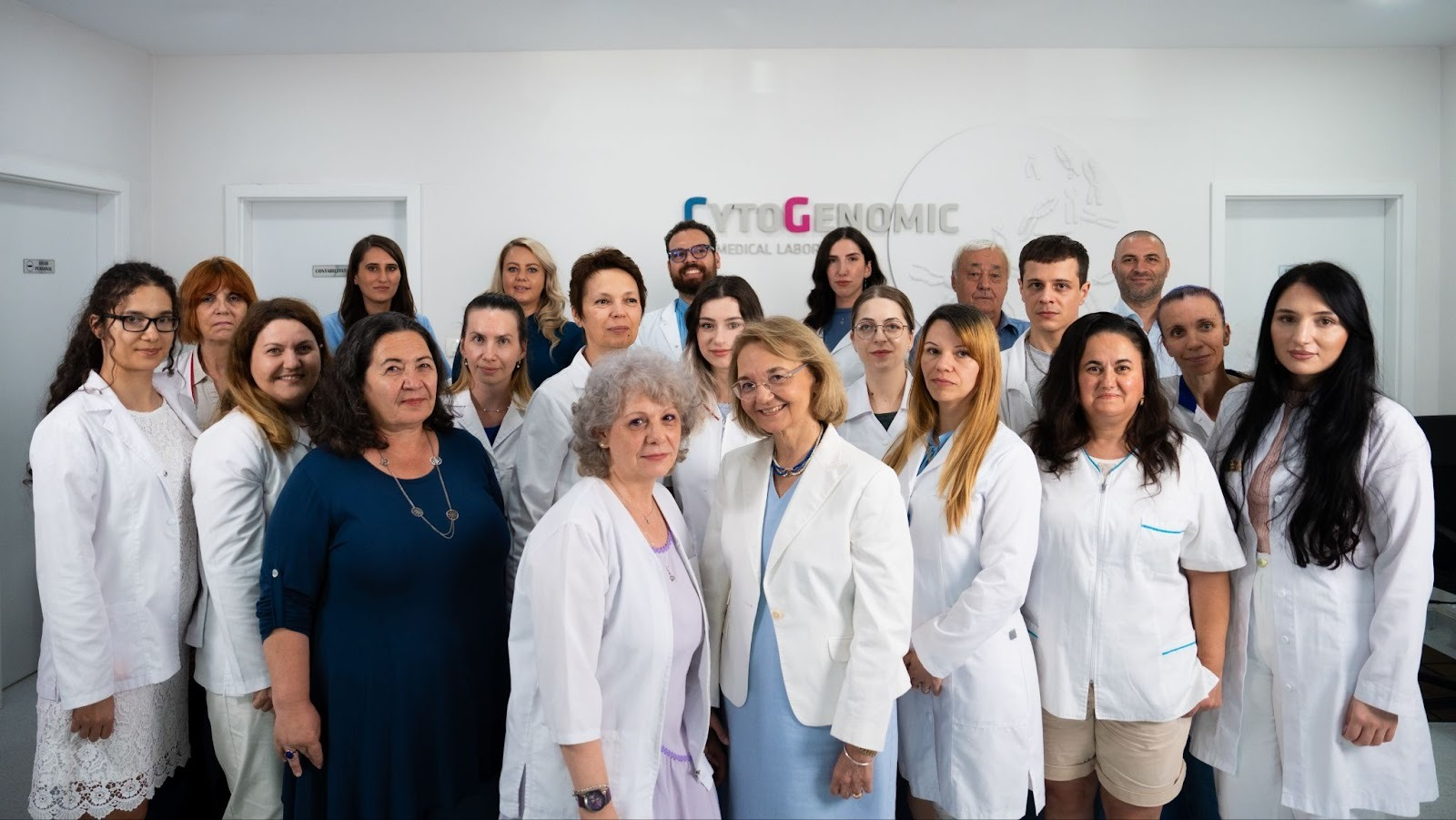
For over a decade, Cytogenomic Medical Laboratory has been a pioneer in Romanian healthcare. As the first local laboratory to perform Next-Generation Sequencing (NGS), they have long been the go-to diagnostics center for over 100 referring hospitals and clinics across Romania and the Republic of Moldova serving around 11,000 patients yearly.
But for their team of geneticists, being "first" wasn’t enough. Their aim was to be best-in-class.
While their Whole Exome Sequencing (WES) capabilities were robust, the team recognized that the future of precision medicine lay in Whole Genome Sequencing (WGS). The cost of WGS was falling, but the data complexity was skyrocketing. Moving from analyzing 2% of the genome (the exome) to nearly 100% meant facing a tidal wave of variants to review, interpret, and report.
The challenge was clear: how do you scale up to the "gold standard" of diagnostics without drowning in data or sacrificing turnaround times for anxious patients?
Bridging the Expertise Gap
Cytogenomic needed more than just software; they needed a partner who had already navigated the WGS transition at scale. They turned to SeqOne’s Clinical Interpretation Services (CIS).
Unlike standard support tiers, the SeqOne CIS team based out of the Wellcome Sanger Institute is composed of registered Clinical Scientists (HCPC) with deep roots in the UK’s NHS. This wasn't just technical support; it was peer-to-peer scientific collaboration.
“We needed to gain more expertise in WGS data analysis to maintain our diagnostic yield and, crucially, to feel comfortable knowing when to conclude an analysis,” explains Andreea Tutulan-Cunita, Geneticist at Cytogenomic Lab.
The Transformation: From Validation to Independence
The collaboration was designed not as a crutch, but as a scaffold to build Cytogenomic’s internal capacity. The SeqOne CIS team deployed a four-pronged strategy to elevate the lab’s operations:
- Strategic Blueprinting: the team conducted comprehensive reviews of the lab’s first 20 WGS cases, helping design robust filtering workflows that separated signal from noise.
- The "Why" Behind the Result: instead of just providing answers, SeqOne provided rationales. Every interpretation came with a detailed justification, turning real patient cases into learning tools for the Cytogenomic staff.
- Confidence in Reporting: expert validation of clinical findings allowed the lab to issue accurate reports with confidence, eventually empowering them to fully internalize the process.
- Elevated Lab Autonomy: the partnership delivered structured onboarding via high-quality educational resources, regular follow-up sessions, and concurrent validation analyses, empowering the lab with core competencies, confidence, and self-capabilities for WGS data analysis.
“We were wholly enchanted with the genetic interpretation platform – a truly game-changing and powerful tool vital for efficient and accurate analysis,” says Andreea Tutulan-Cunita, a Geneticist at Cytogenomic Lab. “Furthermore, the brilliant and friendly technical support team was one of the most important arguments in favor of continuing our collaboration.”
Impact by the Numbers
The transition has fundamentally changed the lab's operational DNA. Prior to the partnership, the complexity of genomic data forced the lab to cross-reference multiple commercial platforms to validate nearly half of their cases. Today, that dependency has been substantially reduced. Additionally, consolidating with a single partner resulted in a price reduction of approximately 15% while improving productivity, which in turn helped them attract more collaborations to their lab.
The result is a streamlined, high-trust workflow that has successfully analyzed and reported on approximately 510 patient cases i.e., 80% of the backlog since the collaboration with the SeqOne CIS team.
The partnership drastically reduced the hands-on analysis time per sample by 40%. This efficiency gain meant that moving to a more complex diagnostic method didn't result in logjams, so patients received their results faster and more accurately.
Looking Ahead: Prevention as the New Frontier
With a robust WGS pipeline now fully operational, Cytogenomic is already looking at the next horizon. The lab is currently exploring an expanded collaboration with SeqOne to leverage their interpretation expertise for disease prevention screening.
By applying their refined WES and WGS capabilities to predictive testing, they aim to identify risks for hereditary cancers, cardiovascular issues, and neurodegenerative disorders before symptoms arise, moving their service from purely diagnostic to truly preventative.