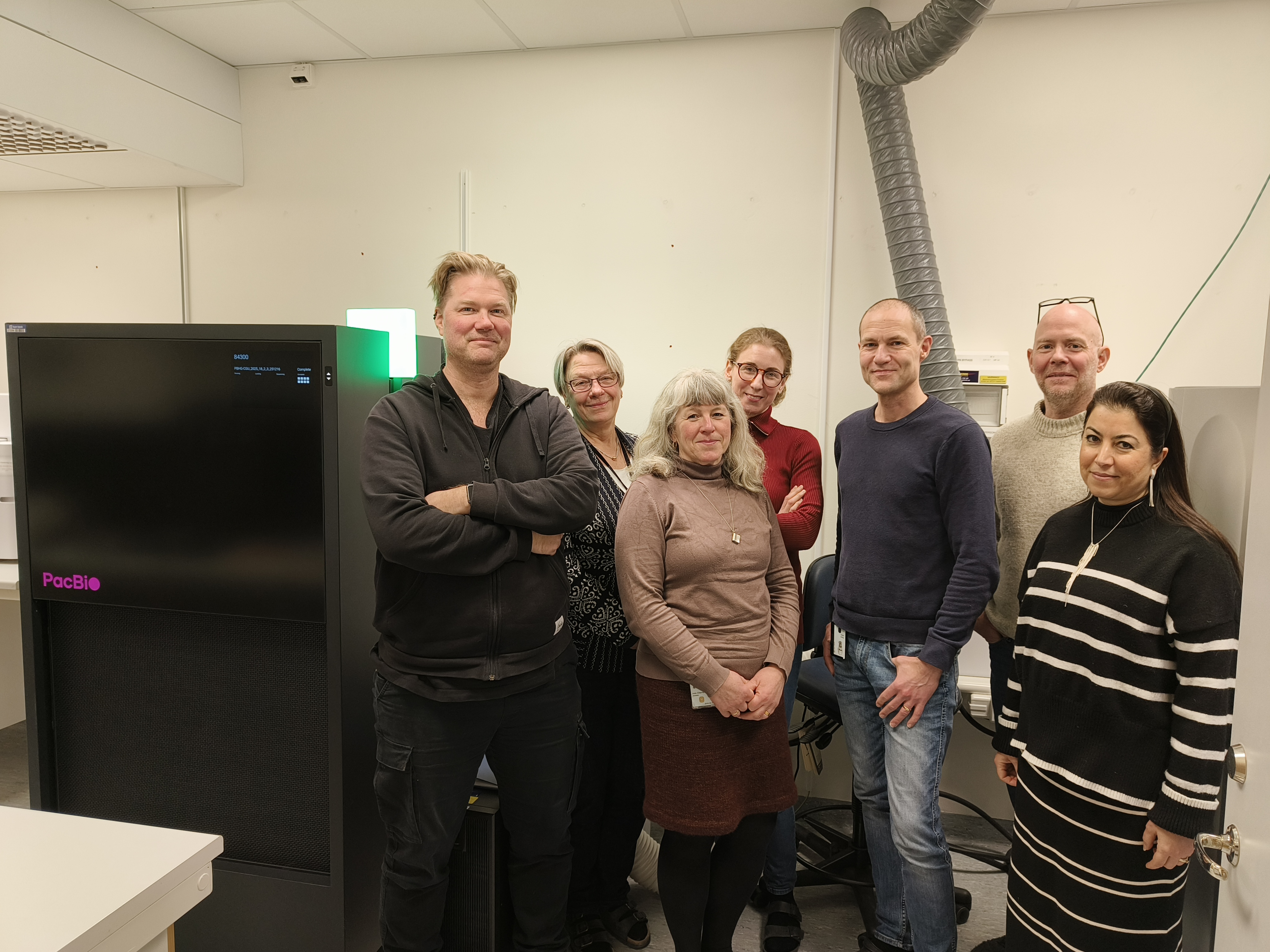
Uppsala University Hospital's Department of Clinical Genetics stands at the forefront of personalized medicine in Europe. They serve around 2.2 million patients in Sweden, with an estimated annual throughput of 4,500 gene panels, exome and genome sequencing, and 400 array analyses.
As a leading genomics lab, their vision is clear: to build a unified, in-house genomics powerhouse. To achieve this, they needed more than just a software provider; they needed a strategic partner to help them integrate diverse sequencing technologies and streamline their entire workflow - from sample to final report. They chose SeqOne.
This is the story of a partnership that is setting a new standard for clinical genomics.
The Challenge: streamlining complexity for faster insights
The team in Uppsala faced a growing challenge familiar to many leading genomics labs: the need to consolidate an increasingly complex and demanding workflow. They were managing multiple data types, including short-read, long-read, and soon RNA sequencing, and grappling with difficult-to-analyze variants like SVs and insertions.
Their core objectives were ambitious yet critical:
- Eliminate fragmentation by integrating all analyses onto a single, powerful platform.
- Maintain full control by bringing all processes in-house, reducing reliance on external labs and cutting costs.
- Accelerate interpretation to deliver life-changing results to patients faster.
"We have a constant time pressure to produce results," explains Ann-Charlotte Turesson, Clinical Laboratory Geneticist at Uppsala University Hospital. "The more information you can gather in one place, the quicker you can perform the interpretation. Our goal is to integrate as many different types of analyses into one platform as possible."
The solution: SeqOne, a true partnership forged in innovation
After a rigorous comparison of available solutions, Uppsala selected the SeqOne Platform. The decision was driven not only by the platform's best-in-class technology and advanced parallel data handling from several different sources, including microarray and emerging data types such as long-read sequencing, but also by the excellent support and engagement from the SeqOne team.
Empowering geneticists through customizable intelligent filtering & AI-driven workflows
One of the most immediate game-changers for the Uppsala team was SeqOne’s AI-powered DiagAI tool. Its intelligent ranking system greatly reduced the time spent reviewing variants. By applying stricter, more complete filters than their previous tool - where they complemented variants ranking using modified ACMG criteria - DiagAI allowed Uppsala’s geneticists to focus their expertise on the most clinically relevant findings instantly.
The team emphasized the importance of custom filters, as compared to the previous tool, to detect, annotate and prioritize several different variant types with high reliability, including deep intronic variants, structural variants, repeats, mitochondrial variants and insertions, especially as the lab is moving towards sequencing methods that can detect these variants. DiagAI allows to look for variants in genes not yet associated with known diseases, benefiting research projects and compensating for potential lack of updates in public resources.
SeqOne’s DiagAI tool significantly reduced variant review time by applying powerful filter criteria that prioritize clinically relevant findings, especially for SNVs. Relevant one-in-page peer-reviewed variant annotation available in the “variant table”, has led to substantial saving in analysis time.
"DiagAI is really powerful. It’s helping us a lot." notes Joakim Klar, Clinical Laboratory Geneticist. "The accuracy of DiagAI successfully classifies known SNVs on top of the list. The list to go through is smaller than before: this is a key success factor.The ability to customize or delete filters and start over as needed is a key advantage.”
Dedicated support and user-driven innovation
Another key success in this collaboration is the continuous, close collaboration with SeqOne’s support team, including rapid issue resolution and agile feature enhancement driven by the lab users' insights.
"With SeqOne, we don't just have a provider; we have a dedicated partner. The team is constantly communicating, rapidly solving issues, and evolving the platform with us. That level of collaboration is invaluable for a lab like ours." — Hans Matsson, Clinical Laboratory Geneticist.
Pioneering long-read analysis, together
The true strength of the partnership was showcased when Uppsala decided to implement PacBio long-read sequencing into their clinical routine. At the time, there was no off-the-shelf solution. Instead of hitting a roadblock, they found a dedicated development partner in SeqOne.
While current use of SeqOne platform enables efficient and accurate variant analysis including CNVs and structural variants, the lab is planning full automation via API-based data upload and seamless support of long-read sequencing data from PacBio. This progressive approach is backed by the consistent support of the SeqOne team and clear guidelines, ensuring a smooth transition and continued success as workflows evolve and scale.
The Impact: a new era of efficiency and scalability
The collaboration is already delivering positive results, positioning Uppsala University Hospital to meet the future demands of genomic medicine head-on:
- Accelerated Interpretation: The team immediately noticed a difference with SeqOne, enabling quicker turnaround times for the majority of variant types.
- Centralized Control: The lab now has a single, centralized platform for its diverse genetic applications, from sample analysis to comprehensive variant reporting with the possibility for direct integration with their LIMS.
- Future-Proof Workflow: While routine analysis is already streamlined, the next phase of the partnership is focused on full automation. This will create a seamless, scalable workflow from the wet lab to the final report, backed by SeqOne's dedicated support and clear guidelines.
By choosing SeqOne, Uppsala University Hospital didn't just adopt a new platform; they gained a partner committed to co-creating the future of clinical genomics. Together, we are building a more efficient, powerful, and integrated workflow to unlock the full potential of personalized medicine.