The reference databases behind modern genetic diagnosis were assembled largely from European and North American populations. For patients elsewhere, that gap is not abstract. It shows up in the clinic, in the form of answers that never arrive.
The allele frequency catalogs, variant classification frameworks, and population cohorts that genomic diagnostics depend on were built on a narrow slice of human ancestry. When a laboratory in Latin America runs an exome and finds a variant absent from those catalogs, it often cannot say with confidence whether the variant is harmless or the cause of a child's illness. The result is recorded as a Variant of Uncertain Significance (VUS), and for the family it usually means going home without a diagnosis.
"VUS are more frequent in our population precisely because of lower representation in reference cohorts," says Dr. Marcela Gálvez, MD, MSc, Scientific Medical Director of Gencell LATAM. "Every unresolved VUS is a family left without answers. At our volume, even a small percentage translates into hundreds of patients per month."
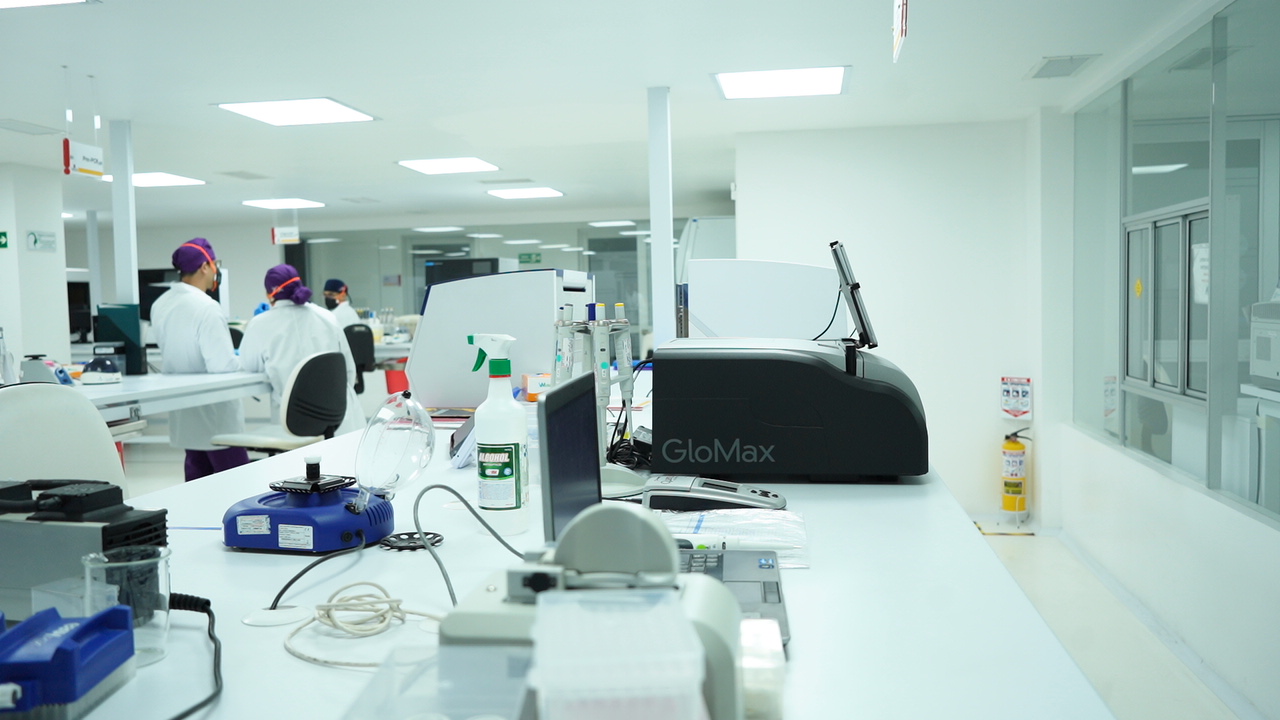
Volume is the part worth pausing on. Gencell, based in Bogotá and operating across Colombia, Brazil, Mexico, Ecuador, Peru, and Panama, processes roughly 4,500 genetic studies a month, nearly 2,000 of them exomes. It is, by its own account, the region's first and largest sequencing center, and working toward CAP accreditation.
At that scale, variation in how analysis is performed stops being an operational detail and becomes a question of patient safety. It was partly to manage that risk that the laboratory adopted SeqOne's analysis platform.
Validating before deploying
Gencell did not take the platform on faith. Before clinical use, it ran a prospective validation across 31 clinical exomes, 23 known-positive cases and 8 confirmed negatives, covering single nucleotide variants, indels, and copy number variants. The platform returned full sensitivity, specificity, and positive predictive value, with 29 of 29 cases concordant and no false positives or false negatives.
Numbers like these set a baseline; they do not, on their own, explain why a lab commits to a system. What shortened the path to deployment, according to Gencell, was the working relationship: hands-on support from the SeqOne team that streamlined onboarding and compressed the validation timeline.
SeqOne's standing as an IVDR Class C certified medical device in the EU adds a layer of regulatory durability that matters as cross-border expectations in genomic diagnostics continue to tighten.
Three cases, handled with the same depth
Aggregate metrics describe a system's average behavior. Individual cases show what it does when the analysis is genuinely difficult. Three are worth recounting, not as near-misses but as illustrations of the kind of work that consistent analysis is meant to guarantee.
- The first case involved a 57-year-old man with hearing loss, retinitis pigmentosa, and a vestibular schwannoma. The gene in question, USH2A, is among the harder targets in clinical genomics: it spans 72 exons and sits beside a pseudogene that causes systematic misalignment and low coverage, which standard pipelines often mishandle. The platform identified two pathogenic variants and confirmed through segregation analysis that they were inherited in trans, supporting a diagnosis of Usher syndrome type 2. The analysis took about an hour.
- The second case turned on a variant that convention would have discarded. The patient presented with epilepsy, a schwannoma, autism, and intellectual disability. The causal change was synonymous: it altered the DNA without altering the resulting amino acid, and most pipelines filter such variants out early. Here it was flagged because the clinical picture matched tuberous sclerosis, which triggered mandatory splicing analysis. SpliceAI and MaxEntScan indicated the variant created a cryptic donor site likely to yield a truncated, non-functional protein. Without that automated flag, the case would have been signed out as negative.
- The third case involved a ten-year-old girl with a history of prematurity, cerebral palsy, cognitive deficit, and epilepsy. The clinical need was twofold: confirm a previously suspected microdeletion while ruling out other contributing causes. From the sequencing data, at 156x mean coverage, the platform detected a 166.9 kilobase heterozygous deletion at 16p11.2 and, in the same pass, screened single nucleotide variants and mitochondrial DNA. The family received a diagnosis of distal 16p11.2 microdeletion syndrome, along with reasonable confidence that nothing else had been overlooked.
The argument for consistency
What links these cases is less the technology itself than the discipline of applying it the same way every time. Manual variant review varies with the analyst: with fatigue, with interpretive habit, with where a workflow happens to have gaps. At low volume that variability is tolerable. At Gencell's volume it compounds.
A standardized, end-to-end pipeline that runs from the sequencing instrument to the clinical report narrows that variation, which is why the case for automation here reads less as efficiency and more as equity.
The equity point is specific. The same splicing checks, copy number detection, and database cross-referencing applied to a patient whose population is well represented in the reference data are applied, in full, to a patient whose population may barely appear in it. The analysis cannot manufacture data that does not exist, but it can ensure that the depth of scrutiny does not quietly depend on who the patient is.
"The automated pipeline reduces inter-analyst variability," Dr. Gálvez notes. "But more than that, it ensures that every patient, regardless of whether their population was ever included in a reference database, gets the same depth of analysis. That is the ethical argument. That is why this matters."
What comes next
Consistent analysis manages the gap; it does not close it. Doing that requires better data, and Gencell and SeqOne have framed their next steps accordingly. The most consequential is a dedicated Latin American allele frequency database drawn from Gencell's own patient population; a direct effort to put the region into the reference data that diagnosis depends on. Alongside it sit plans to add RNA sequencing to automate functional splicing validation and to move clinical workflows from whole exome toward whole genome sequencing.
Taken together, these are less a product roadmap than a working argument: that with adequate analytical infrastructure and a regional commitment to building it, precision medicine need not keep defaulting to the populations that produced its first datasets. The patients it was slowest to serve can be served as well as anyone else. That outcome is not guaranteed by sequencing more genomes. It depends on choices about how the data is analyzed, who is represented in it, and whether the same standard is held for every patient who walks in.