Most of what clinical genomics delivers answers a question about the present: what explains a patient's condition, or which therapy fits a tumour. Yet the same data can also answer questions about what comes next: how a patient will respond to a drug, which variants they could pass on, what a newborn may be at risk of.
SeqOne Preventive Genomics is our move into that space. It builds toward a genome that informs care before it is needed. Pharmacogenomics is leading the way with GermVar PGx, and carrier screening and newborn screening will follow.
Bringing Pharmacology and Genetics Together
Pharmacogenomics sits at the meeting point of two disciplines. Nicolas Picard, PharmD, PhD, Pharmacologist, University Professor and Hospital Practitioner (PU-PH) at Limoges University Hospital and Faculty of Pharmacy, describes what the module changes in practice:
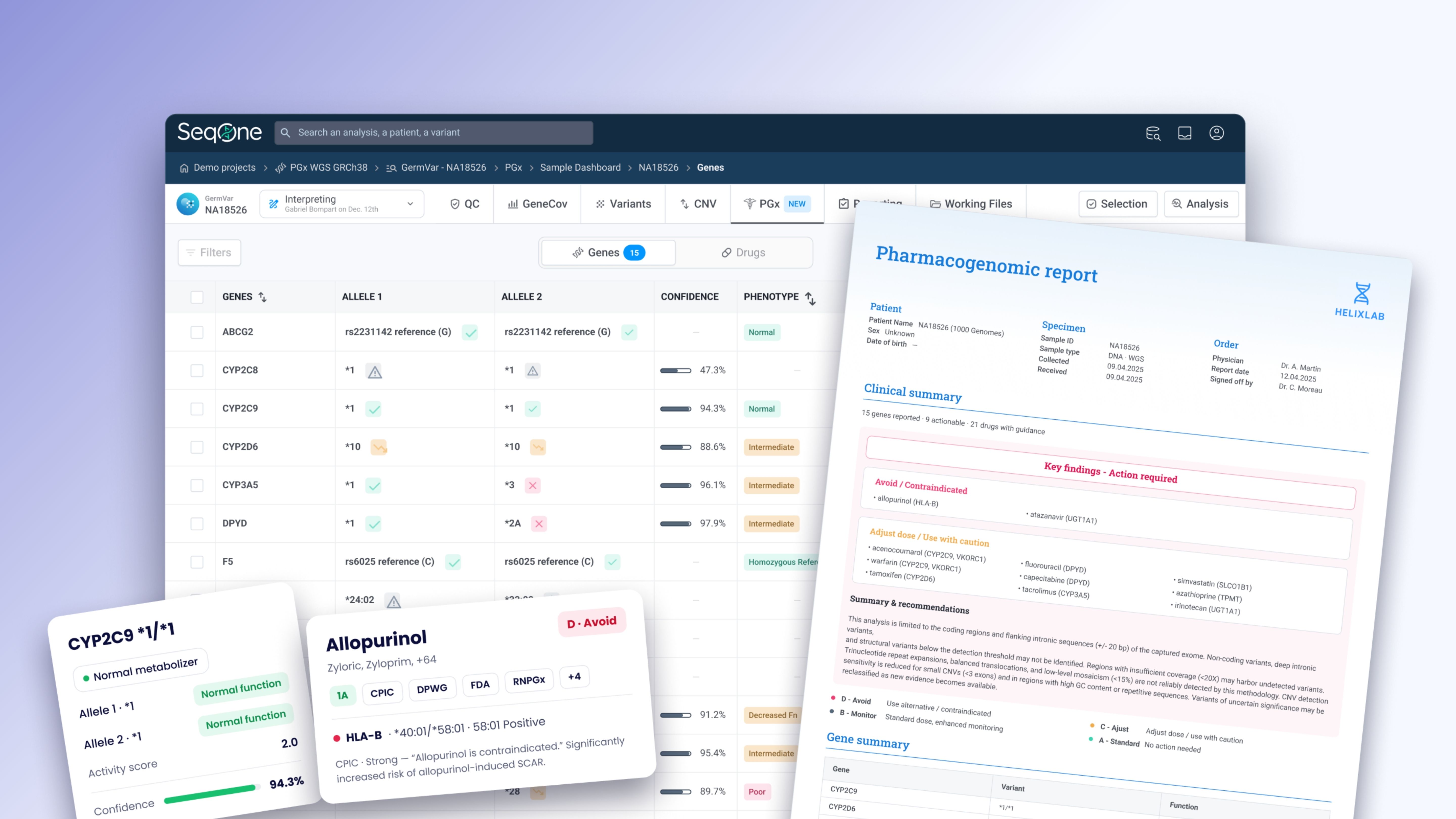
"With this module, SeqOne has finally brought our two worlds together: pharmacology and genetics. In a few clicks we can check our analysis metrics and get everything we need on the variants found. Then, without switching environment or tool, we explore the pharmacological recommendations that apply and format them for clinicians."
The Case for Pharmacogenomics
Pharmacogenomics is one of the most actionable areas of genomic medicine. The key gene-drug pairs are well characterised, and international guidelines translate genotypes into concrete prescribing recommendations: avoid, adjust the dose, monitor, or prescribe as usual.
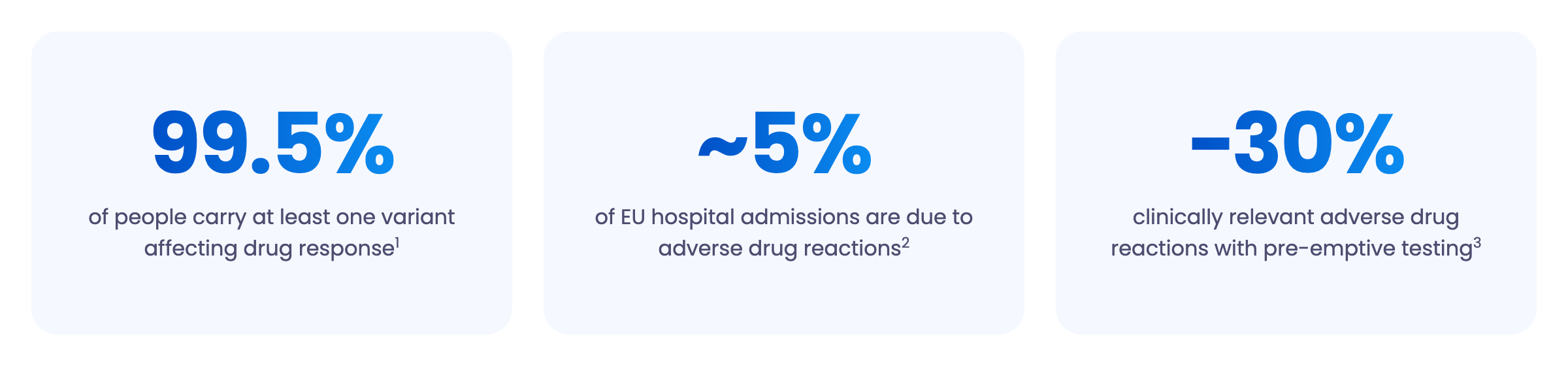
The impact reaches almost every patient. 99.5% of people carry at least one diplotype linked to a non-typical drug response¹, and adverse drug reactions cause around 5% of hospital admissions in the EU². In the PREPARE trial, pre-emptive testing with a 12-gene panel reduced clinically relevant adverse drug reactions by 30%³.
Those genes shape prescribing across specialties:
- Oncology: DPYD, UGT1A1, TPMT and NUDT15 variants can turn standard doses of fluoropyrimidines, irinotecan or thiopurines into severe toxicity.
- Cardiology: CYP2C19, SLCO1B1, CYP2C9 and VKORC1 influence the response to clopidogrel, statins and vitamin K antagonists.
- Psychiatry and pain: CYP2D6, CYP2C19 and CYP2B6 metabolizer status changes the efficacy and safety of antidepressants, codeine and tramadol.
- Drug hypersensitivity: a single HLA allele, such as HLA-B57:01 or HLA-B15:02, can predict a severe reaction to abacavir or carbamazepine.
Three Challenges, and How GermVar PGx Meets Them
Pharmacogenomic testing is widely available, but producing a reliable result raises three practical challenges. GermVar PGx was designed around each of them.
- Complex genes. Key pharmacogenes such as CYP2D6 vary in copy number and structure, which targeted SNP assays do not capture. GermVar PGx estimates copy number in the same calculation that calls the star alleles, so deletions, duplications and hybrid alleles are part of the result. When two alleles fit the data equally well, it keeps the loss-of-function one, so a poorly covered DPYD deletion is not lost.
- Guidelines that differ. International and national guidelines sometimes give different advice for the same drug. GermVar PGx shows recommendations from 11 sources side by side, including CPIC, DPWG, FDA and RNPGx, each with its own wording and link, and the laboratory chooses which sources are reported and in what order.
- A separate test. Pharmacogenomics is often ordered separately, even when the patient's genome has already been sequenced. GermVar PGx runs on the FASTQ files of the germline analysis, for panels, exomes and genomes, with QC, coverage and variants alongside the PGx results.
Built for Expert Review
GermVar PGx supports the experts rather than replacing them: biologists and geneticists review every call and decide what is reported, and clinicians keep the prescribing decision.
- Reviewable calls: every diplotype carries confidence, coverage, fit and separation scores, and novel alleles are flagged for review before anything is reported.
- Transparent, versioned evidence: every recommendation shows its source, so reviewers can check the evidence before anything reaches the report, and every report records the version of the knowledge base it used. The knowledge base runs inside the platform, with no third-party service called during the analysis.
- A PGx passport for each patient: a pre-emptive report, approved by the laboratory before it is issued, with drugs to avoid and drugs to adjust on page one, to inform clinicians' prescribing decisions long after the test.

The Numbers That Matter
GermVar PGx covers 56 pharmacogenes plus HLA-A, -B and -C typing, more than 1,400 alleles with curated function, and more than 160 drugs with over 5,000 recommendations.
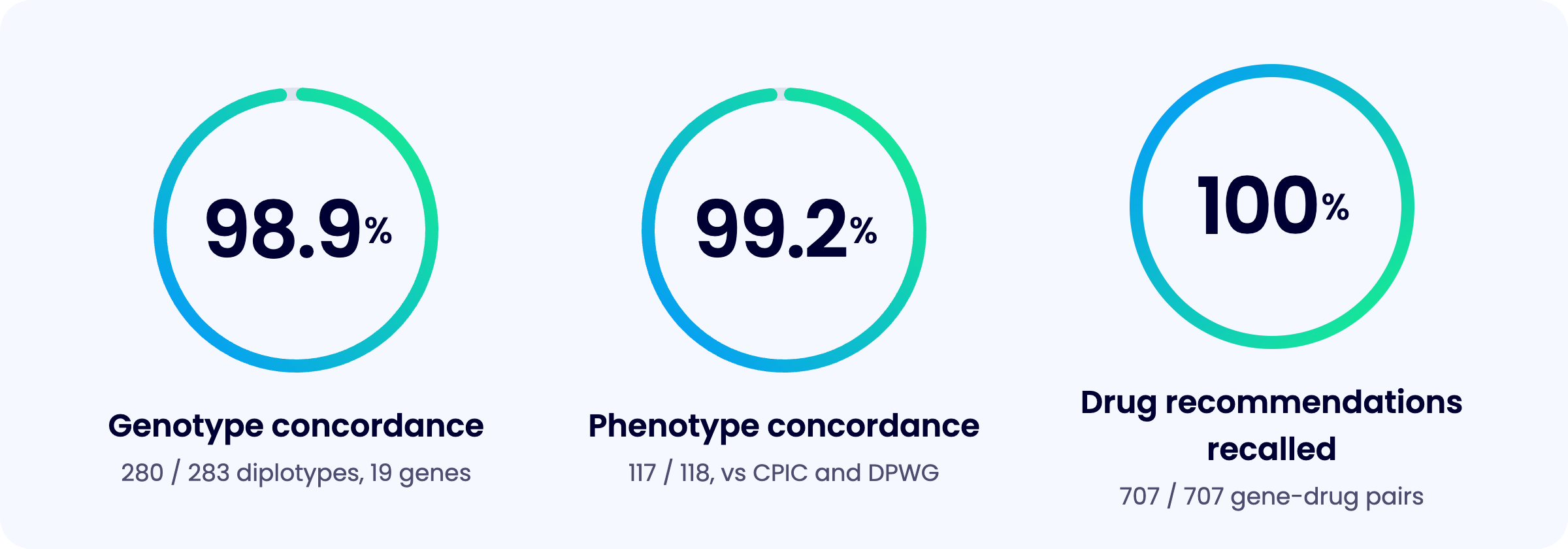
Validated on 56 samples against 4 reference truth sets, it reached:
- 98.9% genotype concordance
- 99.2% phenotype concordance
- 100% recall of the expected drug recommendations, above our 95% acceptance criterion
What Comes Next for Preventive Genomics
Pharmacogenomics is the first module of SeqOne Preventive Genomics, with carrier screening and newborn screening to follow. GermVar PGx will keep growing too, with support for more data types so that laboratories can bring more of their pharmacogenomic testing onto one platform.
Laboratories can validate GermVar PGx on their own samples, with support from our specialists.
GermVar PGx is part of the Fall 2026 Release. Explore all of our new features at seqone.com/releases/fall-2026.

1. McInnes et al., Pharmacogenetics at scale: an analysis of the UK Biobank, 2021. 2. European Commission estimate, 2008. 3. Swen et al., PREPARE trial, The Lancet, 2023.